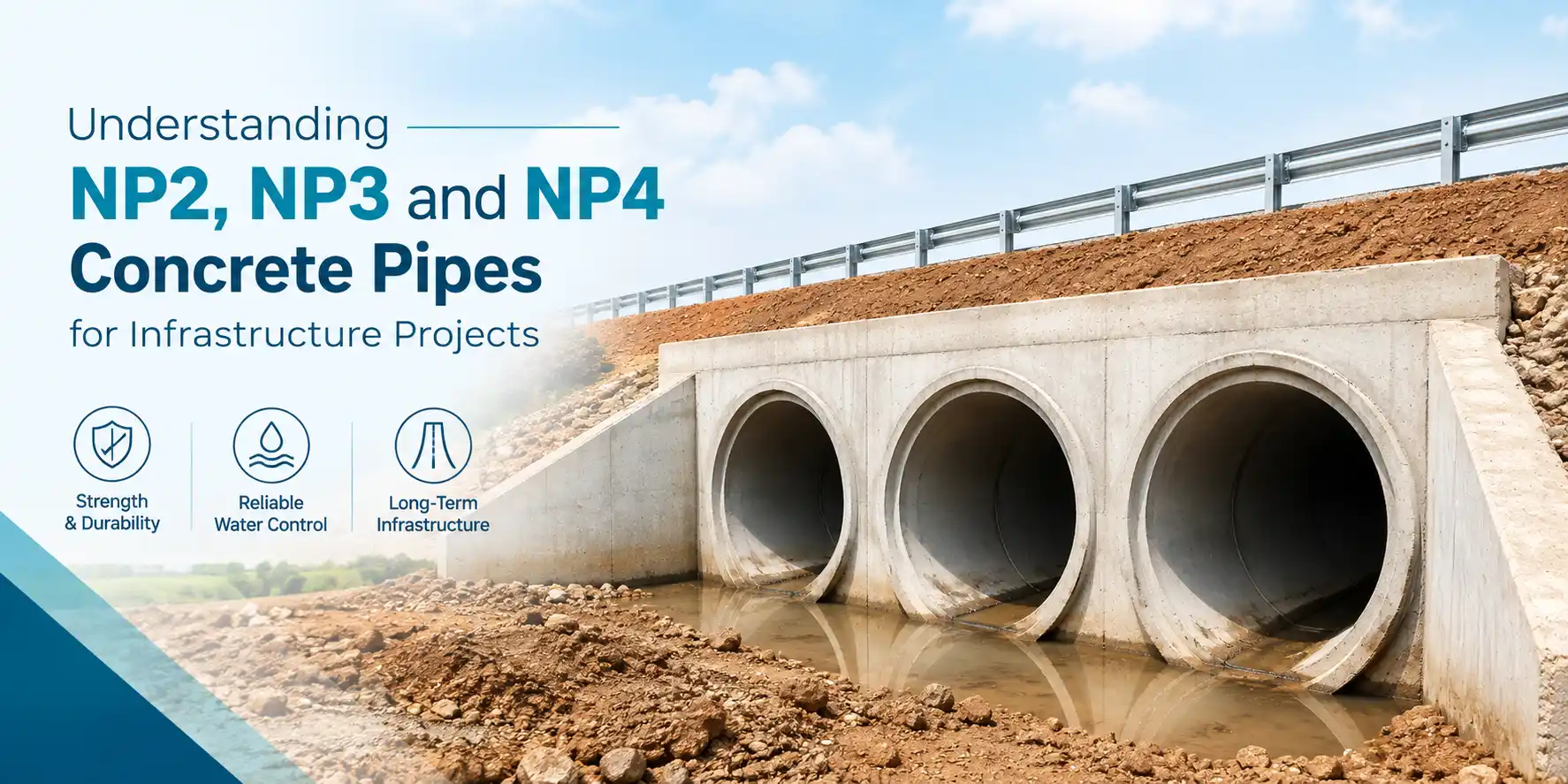
Understanding NP2, NP3 and NP4 Concrete Pipes for Infrastructure Projects
Drainage, sewerage, irrigation and road infrastructure require pipes that match the expected installation conditions and project requirements. In reinforced concrete pipe systems, selecting between NP2, NP3 and NP4 categories is particularly important because each is intended for different levels of application and structural demand.
An RCC Hume Pipe is manufactured using reinforced cement concrete and centrifugal spinning to create a precast pipe for infrastructure applications. Depending on the pipe class, these products can be used for applications ranging from agricultural drainage and residential stormwater systems to highways, deep-burial installations, and large infrastructure projects.
Himalaya Composites & Precast Pvt. Ltd. manufactures NP2, NP3, and NP4 pipe solutions in accordance with IS 458. Understanding the differences between these categories can help engineers, contractors and procurement teams select an appropriate solution for their project.
What Do NP2, NP3 and NP4 Mean?
NP2, NP3 and NP4 represent different categories of non-pressure reinforced concrete pipes. Although all three can be used within drainage and infrastructure systems, they are not intended for identical operating conditions.
The appropriate category depends on factors such as the application, installation environment, loading conditions, burial requirements, and engineering specifications.
At a broad level:
- NP2 is suitable for light-duty non-pressure applications.
- NP3 is intended for heavier-duty non-pressure infrastructure applications.
- NP4 is designed for extra-heavy-duty non-pressure requirements.
Understanding this distinction is important because choosing a pipe simply by diameter without considering its class may result in a specification that does not match the project.
NP2 Pipes for Light-Duty Infrastructure Applications
NP2 pipes are designed for non-pressure, light-duty applications. Himalaya manufactures its NP2 pipes using centrifugal spinning and M25 grade concrete in accordance with IS 458.
Available diameters range from 100 mm to 1200 mm, with standard lengths of 2.0 metres and 2.5 metres.
The specified hydrostatic requirement is 0.07 N/mm².
NP2 pipes can be considered for applications such as:
- Agricultural drainage
- Residential stormwater systems
- Low-traffic culverts
- Garden drainage
- Small sewer networks
- Rural infrastructure
- Irrigation systems
These applications demonstrate why project conditions matter when selecting a concrete pipe. NP2 may be appropriate for lighter-duty infrastructure, but projects involving greater structural demands may require another category.
NP3 Pipes for Heavy-Duty Infrastructure
NP3 pipes move into heavier-duty non-pressure applications.
Himalaya’s NP3 pipes are manufactured through centrifugal spinning using M30 grade concrete, with reinforcement as specified under IS 458. Available diameters range from 150 mm to 2200 mm, with a standard length of 2.5 metres.
They feature a spigot-and-socket joint with a rubber ring, while the specified hydrostatic requirement is 0.07 N/mm².
Typical applications include:
- Urban stormwater systems
- Sewerage networks
- Road culverts with medium traffic
- State highway infrastructure
- NHAI drainage
- Industrial estates
Compared with the lighter-duty NP2 category, NP3 is intended for infrastructure where greater structural performance is required.
NP4 Pipes for Extra-Heavy-Duty Projects
NP4 represents the extra-heavy-duty category within Himalaya’s non-pressure concrete pipe range.
These pipes are manufactured through centrifugal spinning using M35–M40 grade concrete and high-tensile HYSD reinforcement. They are available in larger diameters up to 2200 mm, with a standard length of 2.5 metres and custom options depending on project requirements.
Like NP3, the system uses a spigot-and-socket connection with a rubber ring. The specified hydrostatic requirement is 0.07 N/mm².
NP4 applications include:
- National highway projects
- Railway infrastructure
- Freight corridors
- Deep-burial installations
- Airport apron infrastructure
- Large stormwater networks
- Heavy-load industrial projects
- Bridge approaches
Himalaya’s NP4 pipe information also references IRC and MoRTH guidelines for relevant infrastructure applications.
NP2 vs NP3 vs NP4 at a Glance
Understanding the technical differences makes selection easier.
| Specification | NP2 | NP3 | NP4 |
| Duty | Light Duty | Heavy Duty | Extra Heavy Duty |
| Standard | IS 458 | IS 458 | IS 458 |
| Concrete | M25 | M30 | M35–M40 |
| Diameter | 100–1200 mm | 150–2200 mm | Up to 2200 mm |
| Standard Length | 2.0 & 2.5 m | 2.5 m | 2.5 m |
| Manufacturing | Centrifugal Spinning | Centrifugal Spinning | Centrifugal Spinning |
| Hydrostatic Requirement | 0.07 N/mm² | 0.07 N/mm² | 0.07 N/mm² |
| Typical Use | Light-duty drainage | Heavy-duty drainage | Extra-heavy infrastructure |
This comparison should be treated as a starting point. Final pipe selection should always follow the engineering and technical requirements of the specific project.
What Should You Consider Before Selecting a Concrete Pipe?
Choosing between NP2, NP3, and NP4 requires consideration of several project-specific factors.
Application
Start by identifying where the pipe will be installed. Agricultural drainage and a national highway drainage system clearly present different requirements.
Expected Loading
Traffic and surrounding structural loads should be evaluated. Pipes installed beneath heavily trafficked infrastructure may require a different category from those used in low-traffic environments.
Pipe Diameter
The required diameter depends on the hydraulic and engineering design of the project. Himalaya’s range covers multiple diameters across its NP2, NP3 and NP4 categories.
Burial Conditions
Installation depth and surrounding site conditions should also be considered, particularly for deep-burial infrastructure.
Joint Configuration
For applications where NP3 or NP4 is specified, the spigot-and-socket configuration with rubber ring should be considered as part of the overall pipeline design.
Project Standards
The applicable engineering specifications, standards and project drawings should guide final product selection rather than relying on general application descriptions alone.
Applications Across Drainage and Infrastructure Projects
RCC Cement Pipes have applications across multiple types of infrastructure because different classes can address different project requirements.
In urban areas, they can form part of stormwater and sewerage networks. For roads and highways, concrete pipes can support drainage and culvert infrastructure. Agricultural and rural projects can use suitable pipe categories for irrigation and drainage.
Higher-duty configurations extend their use into national highways, railway infrastructure, airports, industrial areas and other major infrastructure projects.
This broad application range is also why the distinction between NP2, NP3 and NP4 should not be overlooked during procurement.
The Importance of Manufacturing Quality
The performance of precast infrastructure products depends not only on selecting the appropriate category but also on consistent manufacturing.
When procuring Cement Hume Pipes, project teams should verify relevant specifications such as:
- Pipe class
- Diameter
- Concrete grade
- Reinforcement
- Pipe length
- Joint configuration
- Applicable standard
- Project quantity and delivery requirements
Himalaya Composites & Precast Pvt. Ltd. has been manufacturing infrastructure products since 2004 and has supplied products for more than 5,000 projects across 25+ cities.
The company operates with an ISO 9001:2015-certified quality management system and provides pan-India supply for infrastructure requirements.
Selecting the Right Pipe for Your Project
There is no single pipe category that is appropriate for every infrastructure application.
NP2 can serve suitable light-duty drainage and irrigation requirements, while NP3 addresses heavier-duty applications such as urban drainage, sewerage and road infrastructure. NP4 extends into extra-heavy-duty applications including national highways, railways, airports, deep burial and large infrastructure systems.
Contractors and engineers should therefore begin with project conditions and technical specifications before deciding on the pipe category.
For detailed product specifications and available options, explore Himalaya’s RCC Hume Pipes range.
Conclusion
Understanding the difference between NP2, NP3 and NP4 concrete pipes helps project teams select products according to actual infrastructure requirements rather than relying only on diameter or price.
NP2 serves suitable light-duty applications, NP3 addresses heavier drainage and infrastructure requirements, while NP4 is designed for extra-heavy-duty projects. Factors such as loading, diameter, burial conditions, application and engineering specifications should guide the final decision.
Himalaya Composites & Precast Pvt. Ltd. manufactures concrete pipe solutions for drainage, sewerage, road, industrial and major infrastructure projects. Contact Himalaya with your project specifications to identify the appropriate pipe category and configuration.
Frequently Asked Questions
What is the difference between NP2, NP3 and NP4 pipes?
The categories represent different levels of duty. NP2 is intended for suitable light-duty non-pressure applications, NP3 for heavy-duty applications and NP4 for extra-heavy-duty infrastructure requirements.
Which pipe is suitable for highway projects?
The appropriate pipe depends on the project’s engineering specifications. Himalaya lists NP3 for applications including state highways and NHAI drainage, while NP4 is intended for applications including national highways, heavy-load infrastructure and bridge approaches.
What sizes are available?
Himalaya’s NP2 range covers diameters from 100–1200 mm, while NP3 covers 150–2200 mm. NP4 options extend to diameters of 2200 mm.
Which standard applies to these concrete pipes?
Himalaya’s NP2, NP3 and NP4 concrete pipes are manufactured in accordance with IS 458.
Are these pipes suitable for stormwater drainage?
Yes. Depending on the project conditions and required pipe class, concrete pipes can be used in residential, urban and large-scale stormwater drainage networks.
Related Reading
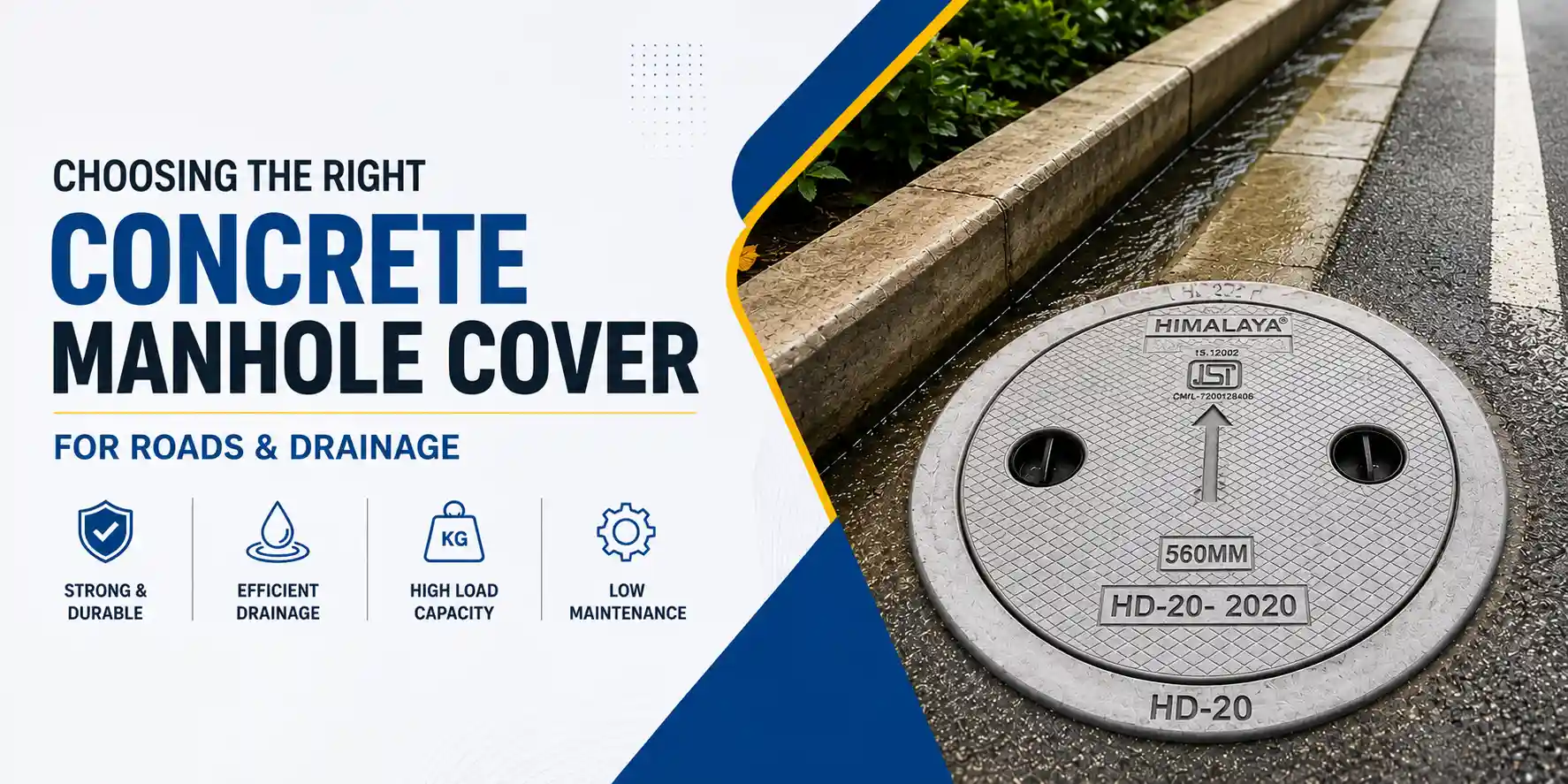
Drainage infrastructure requires both reliable pipelines and suitable access points for inspection and maintenance. Learn more about the factors involved in choosing the Right Concrete Manhole Cover for Roads and Drainage.