Underground manholes and utility chambers provide access to essential infrastructure, including drainage networks, sewerage systems and underground utility connections. During inspection, maintenance, and repair work, workers may need to enter these structures to reach components located below ground level. Proper access arrangements are therefore an important part of chamber design.
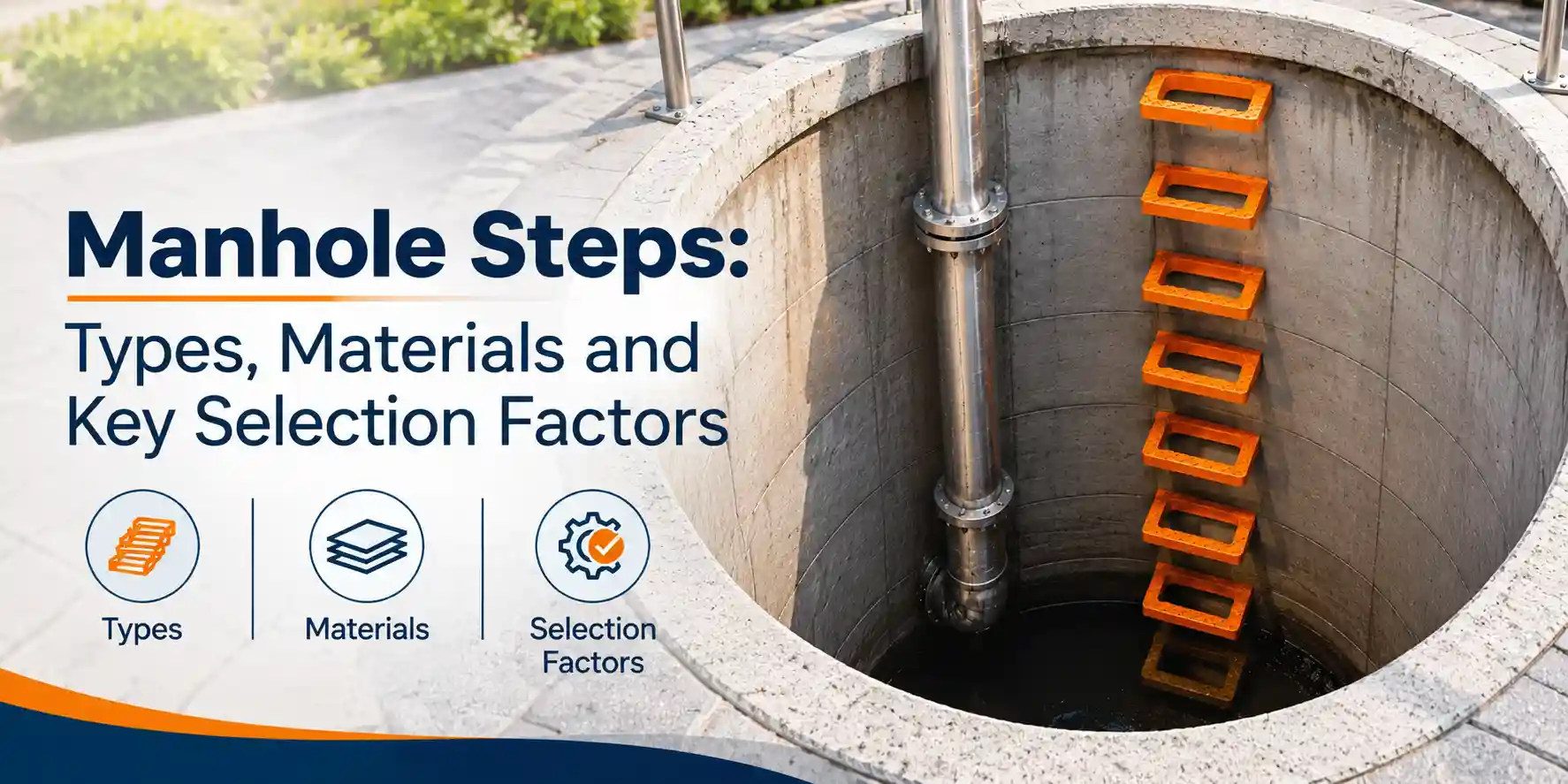
Manhole steps are installed along the inner walls of suitable chambers to provide footholds for people entering or exiting them. Their material, design, positioning and installation all influence how effectively they serve this purpose.
Choosing the right steps requires more than checking their dimensions. Project teams should also consider the chamber structure, environmental conditions, expected use, and applicable safety requirements. This guide explains the main considerations involved in selecting manhole steps for underground infrastructure.
What Are Manhole Steps?
Manhole steps are fixed footholds fitted inside underground chambers and manholes. They help provide a route for personnel to move between the chamber opening and its lower sections when access is required.
These components are commonly used in:
- Municipal drainage and sewerage networks
- Underground inspection chambers
- Water supply infrastructure
- Industrial utility networks
- Stormwater management systems
- Other underground service chambers
The type of step selected depends on the chamber design, installation method, and conditions in which it will be used.
Different Types of Manhole Steps
Manhole steps are available in different materials and designs. Understanding their differences helps engineers, contractors, and infrastructure buyers make more suitable selections.
1. PVC-Coated Manhole Steps
PVC-coated steps generally feature a steel core covered with a PVC layer. This construction combines the structural support of the core with a protective outer surface.
PVC-coated options may be considered for underground environments where moisture and exposure to corrosive conditions are relevant concerns. The outer coating also provides a defined surface for the user’s footwear to contact.
When evaluating these steps, buyers should check the core material, coating quality, dimensions, and fixing arrangement.
For projects considering this type of access component, explore PVC Footstep for Manholes from Himalaya Composites & Precast Pvt. Ltd. to review the product details and available specifications.
2. Cast Iron Manhole Steps
Cast iron steps are another type of foothold used in underground chambers. They are manufactured from cast iron and are selected according to the requirements of the installation.
Before specifying them, project teams should assess the operating environment, material condition, installation arrangement, and maintenance requirements. The suitability of any material should be established against the project’s structural and environmental conditions rather than assumed from the material name alone.
3. Other Metal-Core or Protective-Coated Steps
Some manhole step designs use a metal core with an external protective coating. The core provides the underlying structure, while the outer layer is intended to protect the surface.
When comparing these products, buyers should examine the construction method, coating coverage, material compatibility, and manufacturer’s technical documentation. The product should be assessed as a complete component rather than by considering only its outer material.
Why Material Selection Matters for Manhole Steps
Manholes can be exposed to moisture, wastewater, cleaning activities, and other demanding site conditions. The material used for the steps should therefore be considered in relation to the environment where they will be installed.
Here are some important factors to evaluate.
Corrosion and Environmental Exposure
Moisture and wastewater can affect materials over time. In sewerage and drainage applications, exposure conditions may also include substances that contribute to corrosion.
Buyers should consider whether the selected material and its protective coating are appropriate for the chamber environment. They should also review the manufacturer’s information about material construction and maintenance.
Strength and Structural Support
Manhole steps need to be suitable for the intended access application. Their construction, dimensions, and fixing method should be evaluated together.
The required performance should be established through the project design and relevant technical requirements. Buyers should not rely on appearance or material type alone when assessing suitability.
Surface Grip and User Safety
The surface of a manhole step is another important consideration. A suitable surface profile can help provide contact between footwear and the step.
Where available, buyers should review details such as grooves, surface texture and anti-slip design. The final selection should also account for the conditions in which personnel are expected to use the chamber.
Maintenance Requirements
Access components may require inspection as part of routine infrastructure maintenance. The material, fixing arrangement, and condition of the installed steps can influence how they are inspected and maintained.
Selecting a suitable product at the specification stage can help project teams plan for these requirements more effectively.
Important Factors to Consider When Selecting Manhole Steps
The right product depends on the application and the conditions at the installation site. Consider the following points before finalising a selection.
1. Check the Chamber Dimensions
The internal dimensions and wall arrangement of the chamber should be reviewed before selecting the steps. The product must be compatible with the available installation space and the chamber design.
2. Review the Step Dimensions
Check the product’s overall dimensions, projection, and usable foothold area. These details should be compared with the project drawings and installation requirements.
For example, Himalaya’s PVC footsteps are listed with dimensions of 265 × 165 × 25 mm and a projection of 150 mm. Buyers should confirm the latest product specifications and suitability for their particular application before ordering.
3. Understand the Fixing Method
Manhole steps may be installed using different fixing arrangements, depending on the product design and chamber construction.
Common arrangements include cast-in and anchor fixing. The correct method should be selected according to the manufacturer’s installation instructions and the approved chamber design.
4. Consider the Operating Environment
The conditions inside a drainage, sewerage, or utility chamber may differ from those in a relatively dry inspection chamber.
Consider moisture exposure, wastewater contact, maintenance activity and other relevant environmental conditions before choosing the material.
5. Verify Product Documentation
Request the technical information for the specific product being considered. Review its material construction, dimensions, fixing details, and any applicable test documentation.
Where a project specifies particular technical or compliance requirements, check that the supplied documents relate to the exact product being evaluated.
6. Choose a Suitable Manufacturer
The manufacturer’s product information and technical support can help buyers assess whether a component is appropriate for their project.
Before placing an order, review the product specifications, available sizes, manufacturing details, and support provided for installation-related queries.
Manhole Step Installation and Maintenance Considerations
Selecting an appropriate product is only one part of the process. Correct installation and periodic inspection are also important.
Follow the Approved Installation Details
The fixing arrangement should match the chamber design and the manufacturer’s instructions. Contractors should check the position, alignment, and secure fitting of each step during installation.
Maintain Consistent Positioning
The spacing and arrangement of steps should follow the approved engineering drawings and applicable project requirements. Incorrect positioning can make access difficult, so installation should be checked before the chamber is put into service.
Inspect the Installed Steps
Inspection should form part of the maintenance process for underground chambers. Look for visible damage, deterioration, loose fixings or other signs that may affect the condition of the steps.
Any concerns should be assessed by qualified personnel, with repair or replacement carried out according to the relevant maintenance procedure.
Safety note: Entering a manhole or sewer chamber can involve confined-space hazards, including hazardous gases, oxygen deficiency, and other risks. Manhole steps do not make entry safe by themselves. Access must follow the applicable confined-space procedures, risk assessment, and safety controls.
Common Mistakes to Avoid When Choosing Manhole Steps
A few selection and installation mistakes can create avoidable problems during the life of an underground chamber.
- Choosing only by price: A low purchase price should not replace an assessment of material, construction, and suitability.
- Ignoring environmental conditions: The selected material should be appropriate for the moisture and exposure conditions at the site.
- Overlooking dimensions: Incorrect dimensions or projection can affect compatibility with the chamber design.
- Using an unsuitable fixing method: Installation should follow the product instructions and approved construction details.
- Skipping inspection: Installed steps should be checked periodically as part of the chamber maintenance process.
- Assuming all products have the same specifications: Compare the technical documentation for each product before making a decision.
Conclusion
Manhole steps are important components of underground drainage, sewerage, and utility chambers because they provide footholds for personnel who need access for inspection and maintenance. Their suitability depends on several factors, including material, dimensions, surface design, fixing method, and the conditions in which they will be installed.
Before selecting a product, project teams should review the chamber design, confirm the technical specifications, and ensure that the installation follows the approved requirements. A considered selection process can help avoid compatibility issues and support the long-term maintenance of underground infrastructure.
For projects evaluating PVC-based access components, explore Himalaya’s PVC Footstep for Manholes and review the product specifications before finalising your selection.
Frequently Asked Questions
1. What are manhole steps used for?
Manhole steps are fixed footholds installed inside underground chambers. They provide a means for personnel to move between the opening and lower sections when carrying out authorised inspection and maintenance work.
2. Which materials are used to manufacture manhole steps?
Manhole steps are available in materials and constructions such as cast iron and PVC-coated metal-core designs. The appropriate option depends on the chamber environment, product specifications and project requirements.
3. Why are PVC-coated manhole steps considered for underground applications?
PVC-coated designs combine a metal core with an external PVC layer. They may be considered where the project requires a protective outer surface and a particular material construction. Buyers should check the manufacturer’s technical details before selecting them.
4. What should be checked before purchasing manhole steps?
Review the dimensions, material construction, projection, surface design, fixing arrangement and relevant product documentation. These details should be compared with the chamber design and project requirements.
5. How are manhole steps installed?
Depending on the product and chamber design, steps may use cast-in or anchor fixing arrangements. Installation should follow the manufacturer’s instructions and approved engineering drawings.
6. Do manhole steps eliminate the risks of entering underground chambers?
No. Manhole steps provide footholds, but they do not remove confined-space hazards. Entry requires appropriate risk assessment, trained personnel and the safety procedures applicable to the site.