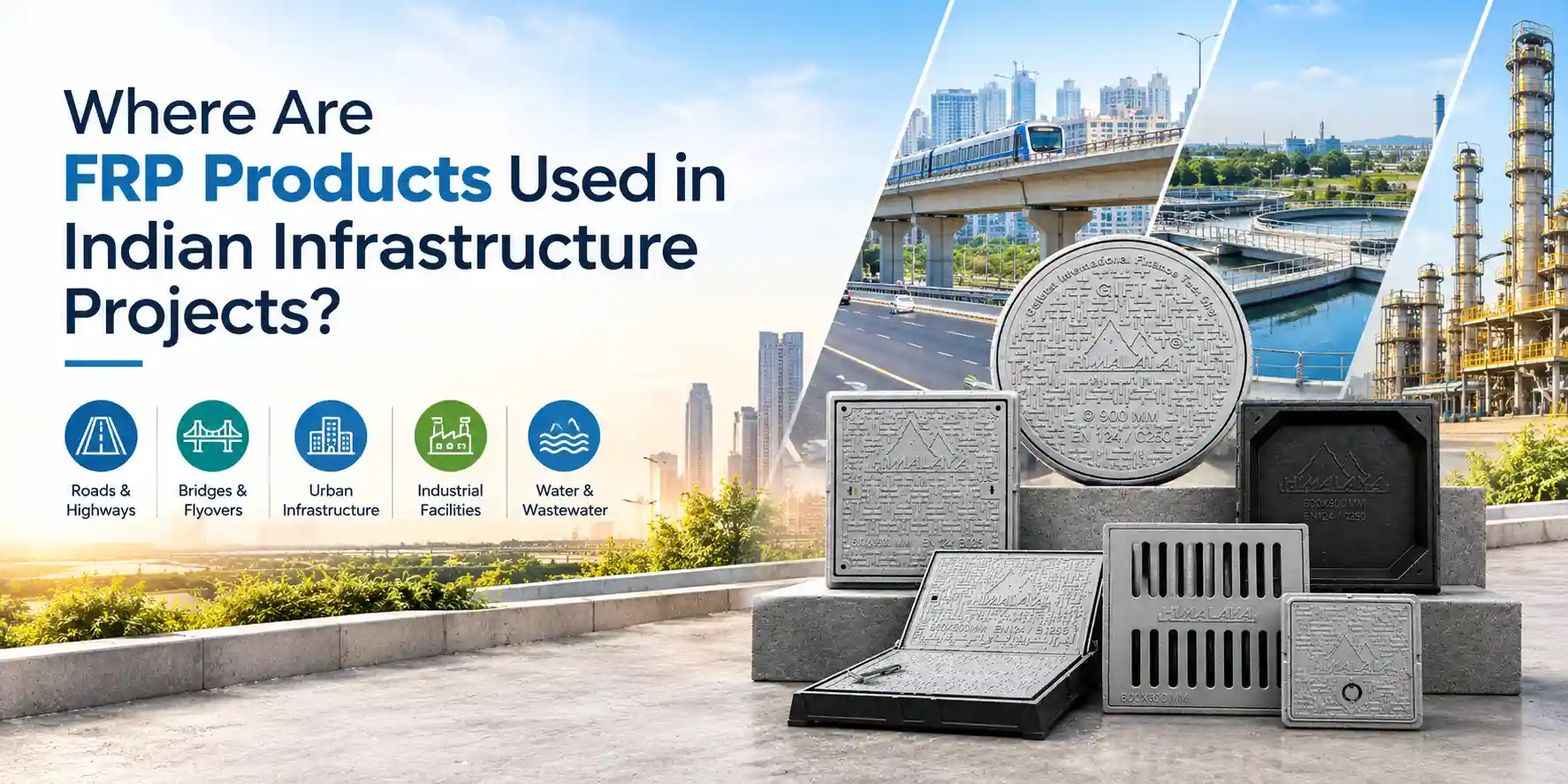
Infrastructure projects across India require components that can perform under different site conditions, from municipal drainage networks to industrial facilities and underground utility systems. Selecting suitable materials and product designs is an important part of planning these installations.
Fibre Reinforced Polymer (FRP) products are used in several infrastructure applications where corrosion resistance, practical handling, and application-specific design are important considerations. Depending on their construction and specifications, these products can provide solutions for access openings, drainage systems, trenches, and industrial walkways.
For engineers, contractors, and procurement teams exploring FRP Products in India, understanding where each product category is used can help narrow down suitable options for a project.
What Are FRP Products?
Fibre Reinforced Polymer, or FRP, is a composite material made by combining reinforcing fibres with a polymer resin. The finished material’s characteristics depend on its composition, manufacturing process, and product design.
In infrastructure, FRP is used to manufacture different components, including covers, gratings, and other access or drainage products. These items serve different purposes, so their specifications must be evaluated individually.
For example, a cover installed over an underground utility chamber has different requirements from a grating used on an industrial walkway. The intended application should therefore guide product selection.
1. FRP Products for Underground Utility Access
Underground infrastructure includes chambers and access points used for drainage, sewerage, electrical services and other utilities. These locations require covers that fit the relevant opening and suit the conditions in which they will be installed.
FRP Manhole Covers
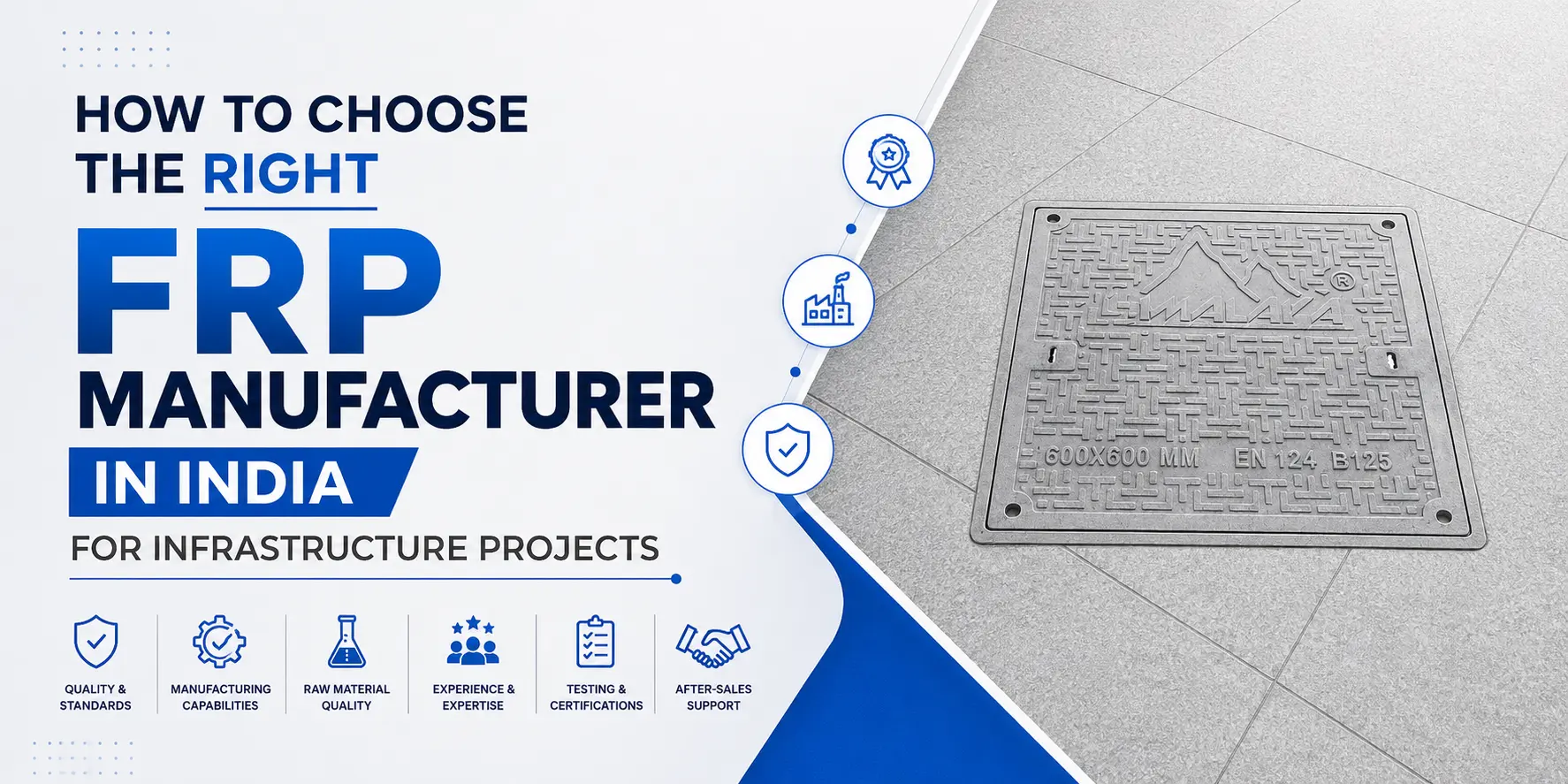
FRP manhole covers are used to cover suitable underground chambers while allowing access for inspection and maintenance. Depending on their specifications, they can be considered for drainage networks, sewerage infrastructure, utility access points and commercial developments.
Their resistance to corrosion can be useful in environments where moisture or certain chemicals are a concern. However, the selected cover must also meet the required load class, dimensions and installation requirements.
Project teams should check the opening size, frame compatibility, expected traffic, and relevant technical specifications before selecting a cover.
FRP Recess Manhole Covers
Some buildings require access covers that blend with the surrounding floor finish. Recess manhole covers have a recessed upper section designed to accommodate specified finishing materials, such as tiles or marble.
These products may be suitable for selected commercial buildings, hotels, airports and residential developments where the appearance of the finished floor matters alongside access requirements.
Before installation, the recess depth, cover dimensions, frame arrangement and compatibility with the proposed finish should be confirmed.
2. FRP Products for Surface Water Drainage
Managing surface water is an important part of roads, parking areas, industrial sites and urban developments. Drainage components must allow water to enter the drainage system while meeting the requirements of the surrounding surface.
FRP Water Gully Covers
Water gully covers are installed over drainage openings that collect surface water. Their design may include slots or perforations to allow water to enter the drainage network.
FRP water gully covers can be considered for suitable applications around roads, footpaths, parking areas, industrial facilities and urban infrastructure.
When evaluating a drainage installation, buyers should consider the expected water flow, opening arrangement, debris exposure, cover dimensions and loading conditions.
For more detailed selection guidance, read our existing blog on choosing the right FRP water gully cover for municipal, industrial and commercial projects.
The cover and its supporting frame should be compatible with the drainage structure and installed according to the project requirements.
3. FRP Products for Utility Trenches
Infrastructure sites often contain underground electrical cables, telecommunications ducts, water pipelines, and other services. These systems may be placed within trenches that need suitable covers for protection and access.
FRP Trench Covers
FRP trench covers are used to cover designated utility trenches in suitable installations. They can be considered for industrial facilities, parking areas, utility corridors, and other locations where underground services require access.
Their corrosion-resistant properties may be useful in environments exposed to moisture or certain chemicals. Product suitability nevertheless depends on the material specification, design and actual site conditions.
Before procurement, project teams should confirm the trench width, cover length, support arrangement, required loading and surface characteristics. The cover must be designed for the conditions it will encounter in service.
4. FRP Products for Industrial Walkways and Platforms
Industrial facilities often require surfaces for personnel movement, equipment access, and routine maintenance. In such settings, the material and construction of walkway components need to suit the operating environment.
FRP Moulded Gratings
FRP moulded gratings are panel-based components used in applications such as industrial walkways, platforms, stair treads and drainage areas.
They are manufactured using reinforcing fibres and resin in a moulded structure. Depending on the product specification, they can be considered where corrosion resistance and practical handling are important.
Potential applications include manufacturing facilities, industrial plants, access platforms and drainage channels.
When selecting a moulded grating, check the panel dimensions, thickness, mesh opening, support spacing and expected loads. Surface requirements should also be reviewed, including whether a grit-top anti-slip finish is specified.
The grating must be suitable for the intended use and installed with the required supports and fixing arrangements.
How FRP Products Meet Different Infrastructure Needs
Although these product categories use FRP materials, they are not interchangeable. Each is designed around a specific function within an infrastructure system.
| Infrastructure Requirement | Relevant FRP Product | Main Selection Considerations |
| Underground chamber access | FRP Manhole Cover | Load class, dimensions, frame fit |
| Access with a finished floor surface | FRP Recess Manhole Cover | Recess depth, finish material, dimensions |
| Surface water collection | FRP Water Gully Cover | Water entry, opening design, loading |
| Covering underground service trenches | FRP Trench Cover | Trench dimensions, support, load requirements |
| Walkways and industrial platforms | FRP Moulded Grating | Panel thickness, mesh, support spacing, surface |
This comparison helps project teams identify the product category relevant to their application before reviewing detailed specifications.
What Should Buyers Check Before Specifying an FRP Product?
Once the application is identified, buyers should confirm several technical details.
Operating Environment
Consider whether the installation will be exposed to moisture, chemicals, outdoor weather or frequent cleaning. Environmental conditions can affect material suitability and maintenance requirements.
Load and Structural Requirements
Covers and gratings must meet the loading requirements of their intended locations. A product suitable for pedestrian use may not be suitable for an area exposed to vehicle or industrial equipment loads.
Confirm the required rating or design criteria for the specific product rather than assuming all FRP components have the same capacity.
Dimensions and Installation
Check opening sizes, frame arrangements, trench dimensions, support spacing, and other installation details. Incorrect dimensions can cause fitting problems and may affect how the finished assembly performs.
Product Documentation
Review the technical information for the particular product, including its dimensions, material, load rating, and applicable standards or test documentation.
Before finalising the selection, buyers should check that the chosen product meets the standards and certification criteria stated in the project specifications.
Conclusion
FRP products support different infrastructure functions across India, from providing access to underground chambers to covering drainage openings, protecting utility trenches and creating industrial walkways.
Manhole covers, recess covers, water gully covers, trench covers and moulded gratings each serve a distinct purpose. Selecting the appropriate option requires consideration of the installation environment, dimensions, loading requirements, product design and relevant technical documentation.
By identifying the project’s needs before procurement, engineers and contractors can evaluate the relevant product category and confirm whether its specifications match the intended application.
To review options for your project, explore Himalaya’s FRP/GRP product range and check the specifications of the relevant product before making a selection.
Frequently Asked Questions
1. What are the main FRP products used in infrastructure?
Common categories include FRP manhole covers, recess manhole covers, water gully covers, trench covers and moulded gratings. Each serves a different access, drainage or industrial purpose.
2. Where are FRP infrastructure products used?
Depending on their design, FRP products can be used in municipal drainage, underground utility networks, commercial buildings, industrial facilities, parking areas and walkways.
3. How should buyers choose the right FRP product?
Buyers should assess the intended application, operating environment, load requirements, dimensions, installation arrangement and technical documentation.
4. Are all FRP products suitable for heavy loads?
No. Load capacity depends on the design and specifications of the individual product. The required rating must be confirmed for the intended installation.
5. Can FRP products be customised?
Custom dimensions or configurations may be available for selected products. Buyers should confirm available options with the manufacturer and ensure that any customised product meets the project’s requirements.