Industrial flooring, walkways, platforms and drainage areas often operate in environments where conventional metal gratings can face corrosion, weight and maintenance challenges. FRP gratings provide an alternative designed to combine structural performance with corrosion resistance and easier handling.
However, selecting the right grating is not simply about choosing a material. The resin system, fibre reinforcement, mesh size, thickness, surface finish, dimensions, and application requirements all influence whether a particular grating is suitable for a project.
Himalaya Composites & Precast Pvt. Ltd. manufactures FRP Moulded Grating using high-strength glass fibre reinforcement with polyester or vinyl ester resin systems. Its moulded construction is suitable for industrial and infrastructure applications where durability, corrosion resistance and safe access are important.
Understanding these factors can help contractors, engineers and project managers specify the appropriate grating for their requirements.
What Makes FRP Grating Different from Conventional Gratings?
FRP grating is manufactured using fibre-reinforced polymer materials, combining glass fibre reinforcement with a resin matrix. This construction provides a lightweight yet durable alternative to conventional steel gratings for applications where corrosion resistance and reduced maintenance are important.
One important characteristic of moulded FRP grating is its one-piece construction. Unlike welded metal gratings, the moulded structure does not rely on welded joints that can become potential maintenance points.
FRP gratings can provide:
- Corrosion resistance
- Lightweight handling
- Durable construction
- Reduced maintenance requirements
- Anti-slip surface options
- Suitability for demanding industrial environments
- Easy cutting and installation for project-specific requirements
The appropriate product should still be selected according to the structural and environmental conditions of each project.
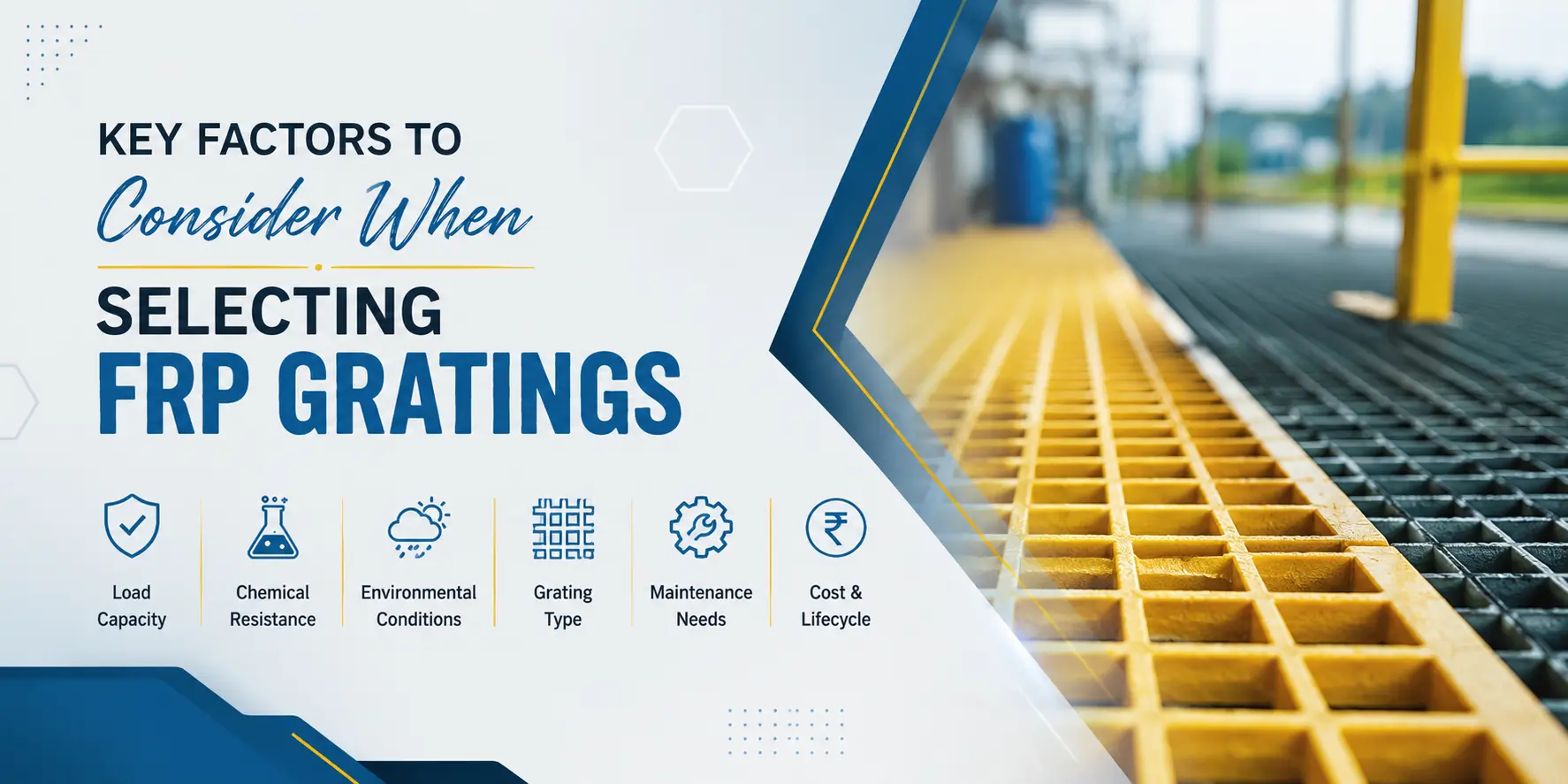
Which Factors Should You Consider When Selecting FRP Gratings?
The correct grating specification depends on where and how it will be used. Before selecting a product, project teams should evaluate several technical and practical factors.
1. Resin System
The resin forms the matrix around the glass fibre reinforcement and plays an important role in the grating’s resistance to the surrounding environment.
Himalaya manufactures its FRP moulded gratings using polyester or vinyl ester resin systems.
The choice between resin systems should be based on the project’s environmental conditions, chemical exposure, and performance requirements. Industrial environments such as chemical processing facilities may have considerably different requirements from general pedestrian walkways.
2. Glass Fibre Reinforcement
Glass fibre provides reinforcement within the polymer matrix and contributes to the structural characteristics of the grating.
A high-strength glass fibre reinforcement system can provide the strength required for applications such as:
- Industrial platforms
- Walkways
- Catwalks
- Stair treads
- Working platforms
- Cable support areas
The reinforcement configuration should be appropriate for the expected application and loading conditions.
3. Mesh Size
Mesh size affects how the grating performs in different applications. Smaller or larger openings may be more suitable depending on pedestrian access, drainage requirements, equipment and the environment below the grating.
Himalaya offers moulded FRP gratings with 38 × 38 mm and 50 × 50 mm mesh sizes.
The appropriate mesh should be selected according to the project requirements rather than choosing a standard size without considering its intended use.
4. Grating Thickness
Thickness is another important specification when selecting an FRP Industrial Grating. Different applications can require different structural configurations.
Himalaya offers FRP moulded gratings in:
- 25 mm
- 30 mm
- 38 mm
- 50 mm
The required thickness should be determined according to the span, support arrangement, expected loading, and project-specific engineering requirements.
5. Load Requirements
The grating should be selected based on the loads it is expected to carry. A pedestrian walkway, industrial working platform, and heavy-duty operating area may have very different loading conditions.
Before selecting a product, consider:
- Expected pedestrian traffic
- Equipment loads
- Maintenance activities
- Span between supports
- Frequency of use
- Installation configuration
Rather than selecting a grating based only on thickness, the complete application and structural requirements should be evaluated.
Why Is an Anti-Slip Surface Important?
Safety is a major consideration for industrial walkways, platforms and access areas, particularly where water, oil or other substances may be present.
Himalaya’s FRP Moulded Grating can be supplied with a grit-top anti-slip surface.
This surface option can provide additional traction for personnel walking across the grating. It is particularly relevant for environments such as:
- Chemical plants
- Wastewater facilities
- Industrial platforms
- Marine environments
- Oil and gas facilities
- Outdoor access areas
The appropriate surface finish should be selected based on the expected operating conditions and safety requirements of the project.
How Does Corrosion Resistance Benefit Industrial Applications?
Corrosion can become a major maintenance concern in environments exposed to moisture, chemicals, saltwater, or aggressive industrial substances. Traditional metal components may require protective coatings and periodic maintenance to manage corrosion.
FRP materials are inherently resistant to corrosion, making them suitable for environments where exposure to corrosive conditions is a concern.
This can make Corrosion Resistant Grating particularly useful in:
- Chemical processing plants
- Wastewater treatment facilities
- Marine infrastructure
- Offshore platforms
- Oil and gas facilities
- Docks and harbours
- Food processing plants
The exact material and resin system should still be matched to the specific chemical and environmental exposure.
Where Are FRP Moulded Gratings Used?
The versatility of FRP gratings allows them to be used across industrial, commercial, and infrastructure applications.
- Industrial Walkways and Catwalks
FRP gratings can create accessible walking surfaces around industrial equipment, production areas and processing facilities.
- Stair Treads and Landings
Moulded grating panels can also be used for stair treads and landings where a durable and slip-resistant surface is required.
- Chemical Processing Plants
The corrosion-resistant characteristics of FRP make it suitable for areas where equipment and flooring may be exposed to aggressive environments.
- Wastewater Treatment Facilities
Wet environments can create significant corrosion challenges for conventional materials. FRP gratings can be used for walkways, platforms and access areas within wastewater facilities.
- Oil and Gas Facilities
FRP gratings can be used in industrial areas where corrosion resistance, durability and reduced maintenance are important considerations.
- Marine Infrastructure
Docks, piers, harbours, offshore platforms and ships can expose materials to moisture and saltwater. FRP provides a corrosion-resistant option for these environments.
- Cable Ducts and Tray Supports
FRP gratings can also be incorporated into cable-related infrastructure and support applications where lightweight and corrosion-resistant materials are beneficial.
What Should You Look for in an FRP Grating Manufacturer?
Choosing the right FRP Grating Manufacturer is as important as selecting the correct product specification. Manufacturing consistency can affect dimensions, structural performance and the overall reliability of the finished grating.
Before selecting a supplier, consider:
- Manufacturing experience
- Material and resin options
- Glass fibre reinforcement
- Available mesh sizes
- Available thicknesses
- Anti-slip surface options
- Standard panel dimensions
- Custom cutting capability
- Quality control processes
- Ability to support project-specific requirements
A manufacturer with suitable production capabilities can help ensure that the grating specification aligns with the project’s actual requirements.
What FRP Grating Sizes Are Available?
Himalaya manufactures standard FRP moulded grating panels measuring 1220 mm × 3600 mm. Custom cutting is also available for project-specific requirements.
The company offers:
| Specification | Available Options |
| Material | FRP/GRP |
| Resin | Polyester or Vinyl Ester |
| Mesh Size | 38 × 38 mm, 50 × 50 mm |
| Thickness | 25, 30, 38, 50 mm |
| Standard Panel | 1220 × 3600 mm |
| Surface | Grit-top anti-slip available |
| Colour | DA Grey, Yellow |
The final specification should be selected according to the intended application, support arrangement, and project requirements.
Why Choose Himalaya for FRP Gratings?
Himalaya Composites & Precast Pvt. Ltd. has been manufacturing infrastructure products since 2004 and has contributed to more than 5,000 infrastructure projects across India.
Its FRP moulded gratings are manufactured using high-strength glass fibre reinforcement with polyester or vinyl ester resin systems. The one-piece moulded construction eliminates welded joints and is designed for applications where corrosion resistance, durability and reduced maintenance are important.
Himalaya provides different mesh sizes, thicknesses and panel dimensions, along with custom cutting for project-specific requirements.
The company also supplies FRP infrastructure products for industrial, municipal, commercial and other demanding environments.
Conclusion
Selecting the right FRP grating requires consideration of more than material type. Resin system, glass fibre reinforcement, mesh size, thickness, expected loads, surface finish, dimensions and environmental exposure all play a role in determining the appropriate specification.
For corrosive industrial and infrastructure environments, moulded FRP construction can provide a lightweight, durable and corrosion-resistant alternative to conventional metal grating. Selecting an experienced FRP Grating Manufacturer can also help project teams obtain products suited to their specific application.
Himalaya Composites & Precast Pvt. Ltd. offers FRP moulded gratings in multiple mesh sizes and thicknesses, with polyester or vinyl ester resin options, anti-slip grit-top surfaces and custom cutting.
Contact Himalaya to discuss the right FRP grating specification for your industrial or infrastructure project.
Related Reading
- Why FRP Moulded Grating Is the Smart Choice for Industrial and Infrastructure Projects
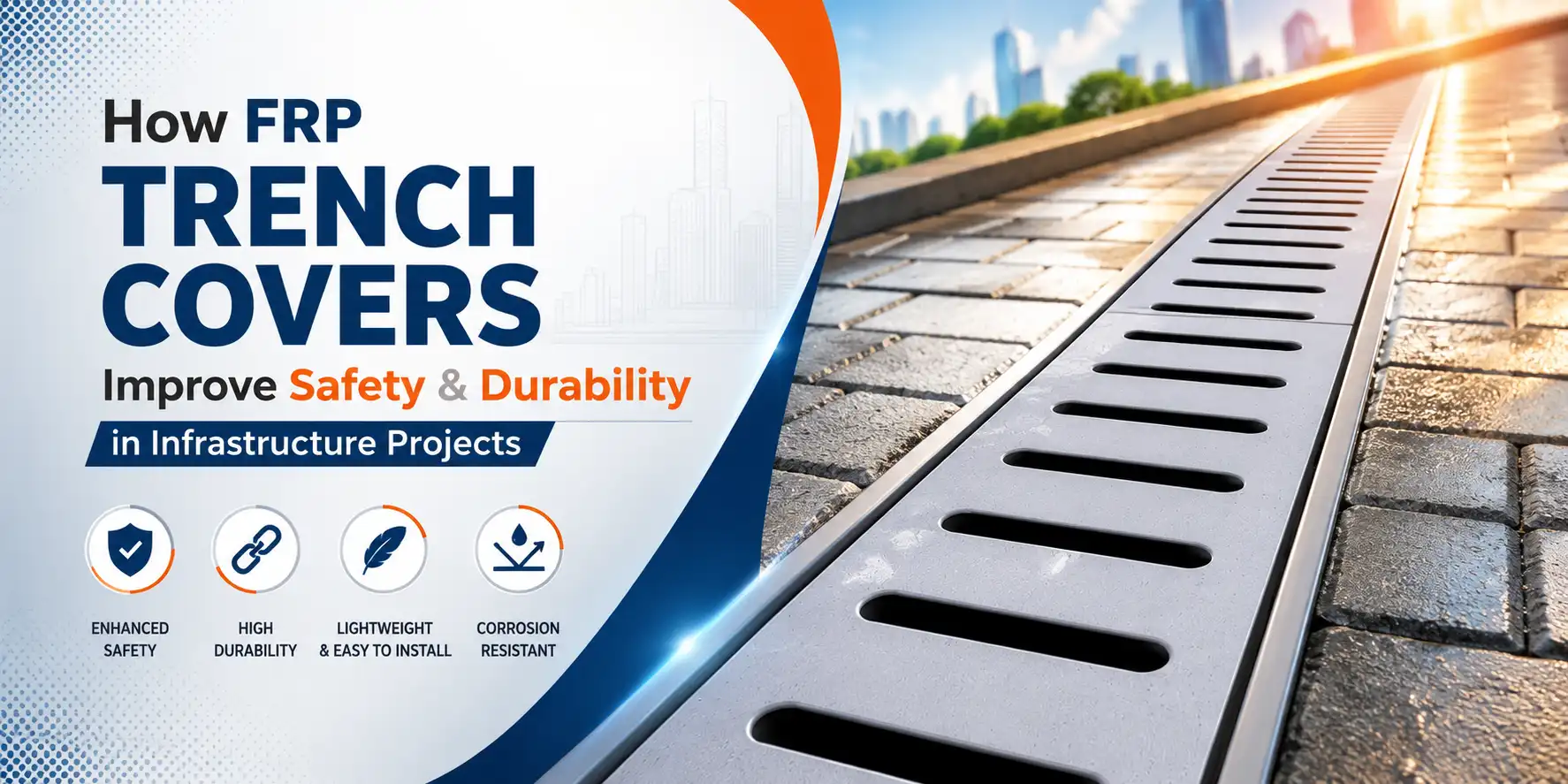
- How FRP Trench Covers Improve Safety and Durability in Infrastructure Projects
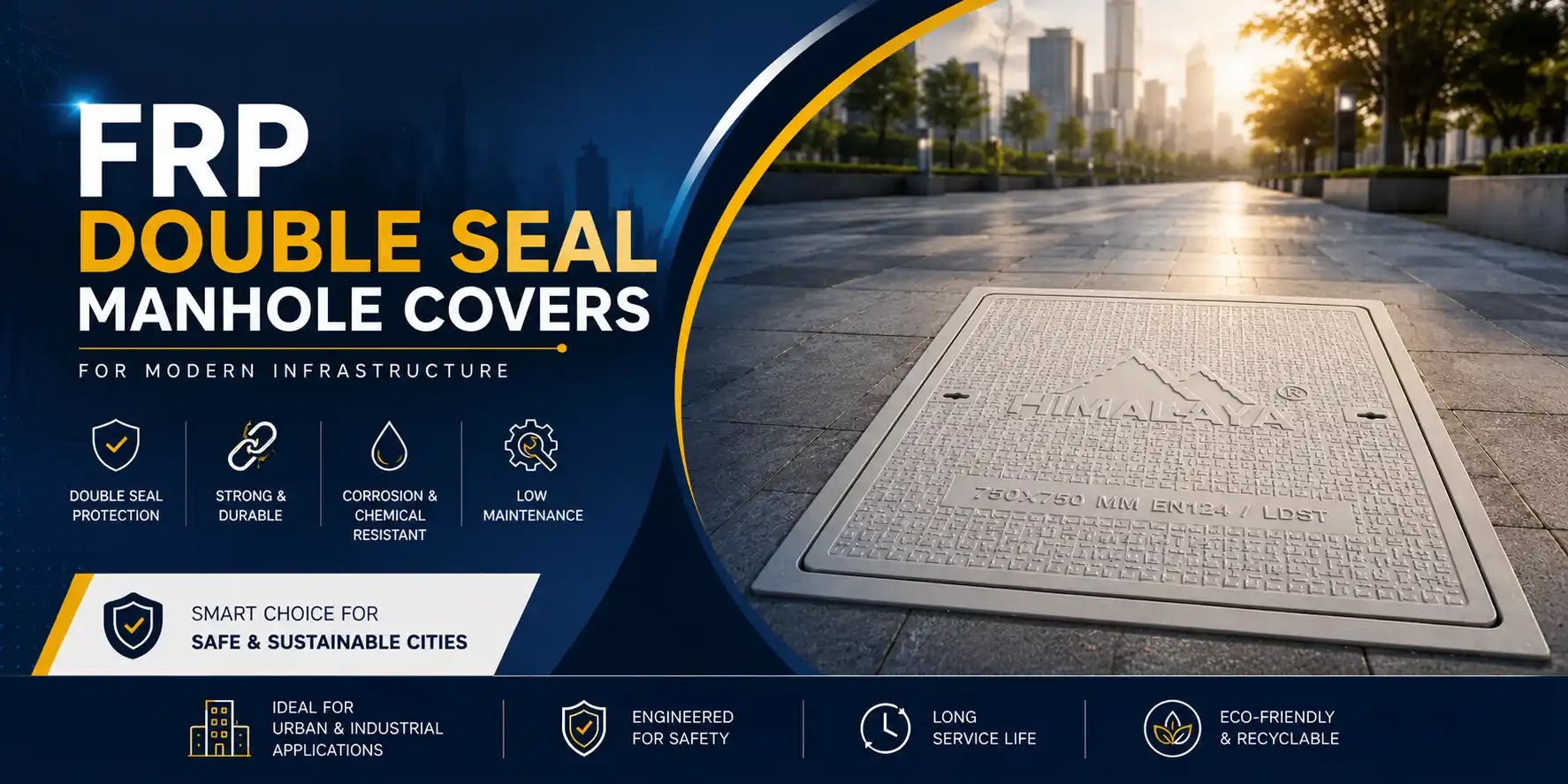
- Why FRP Double Seal Manhole Covers Are Essential for Modern Infrastructure
Frequently Asked Questions
What is FRP moulded grating used for?
FRP moulded grating is used for industrial walkways, catwalks, stair treads, platforms, drainage areas, cable support applications, and other environments where corrosion resistance and durability are required.
What mesh sizes are available for FRP grating?
Himalaya offers FRP moulded gratings with 38 × 38 mm and 50 × 50 mm mesh sizes.
What thicknesses are available?
Himalaya’s FRP moulded grating is available in 25 mm, 30 mm, 38 mm, and 50 mm thicknesses. Selection depends on the application and structural requirements.
Is FRP grating suitable for corrosive environments?
Yes. FRP has corrosion-resistant properties and can be suitable for environments such as chemical plants, wastewater facilities, marine infrastructure, and oil and gas installations. The resin system should be selected according to the exposure conditions.
Can FRP grating be customised?
Yes. Himalaya provides a standard 1220 × 3600 mm panel and offers custom cutting to suit project-specific dimensions.
Does FRP grating have an anti-slip surface?
Yes. Himalaya offers a grit-top anti-slip surface option for applications where additional traction is required.