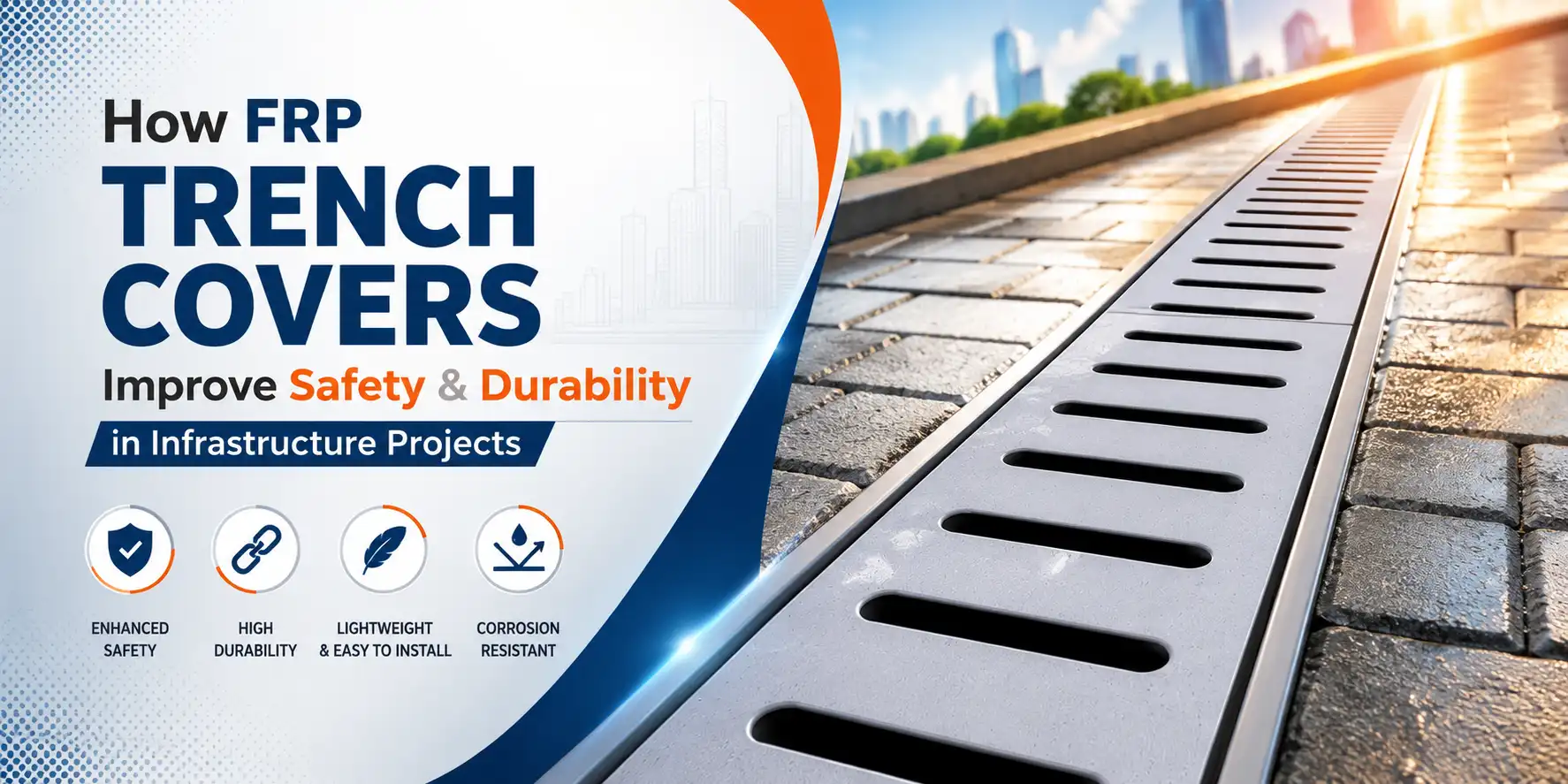
How FRP Trench Covers Improve Safety and Durability in Infrastructure Projects
Modern infrastructure depends on efficient underground utility networks that support electrical cables, telecom ducts, water pipelines, and drainage systems. Protecting these essential services requires FRP trench covers that can withstand demanding environments while providing safe access for inspection and maintenance. Traditional steel and reinforced concrete trench covers have been widely used for years, but challenges such as corrosion, excessive weight, and frequent maintenance often affect their long-term performance.
FRP Trench Covers have emerged as a reliable alternative for industrial, municipal and commercial infrastructure projects. Manufactured using high-strength fibre-reinforced polymer (FRP/GRP) composite materials, they combine durability with lightweight construction, making installation easier while reducing maintenance requirements. Their corrosion resistance, anti-slip surface and long service life make them suitable for environments where conventional materials may deteriorate over time.
In this guide, we’ll explore how FRP Trench Covers improve safety and durability, where they are commonly used and what factors should be considered when selecting the right solution for your project.
What Are FRP Trench Covers?
FRP Trench Covers are composite covers designed to protect underground utility trenches carrying electrical cables, telecom ducts, water pipelines and other essential services. Manufactured from high-strength FRP/GRP composite materials, they provide an effective alternative to conventional steel and RCC trench covers by offering excellent corrosion resistance, reduced weight and long-term durability.
Unlike traditional trench covers, FRP products do not rust when exposed to moisture, chemicals or harsh weather conditions. Their lightweight construction allows for easier transportation, faster installation and convenient access during inspection or maintenance activities. In addition, anti-slip surface finishes help improve pedestrian safety, making them suitable for both industrial facilities and public infrastructure.
Himalaya Composites & Precast Pvt. Ltd. manufactures FRP Trench Covers in multiple widths, lengths, and load classes to suit a wide range of municipal, commercial, and industrial applications.
Typical Technical Specifications
| Specification | Details |
| Material | FRP/GRP Composite |
| Width | 200 mm to 1200 mm Clear Opening (Customisation Available) |
| Length | 600 mm, 900 mm, 1200 mm (Custom Available) |
| Colour | Grey / Custom |
| Surface Finish | Anti-Slip |
| Load Class | A15 to F900 |
These specifications enable FRP trench covers to perform reliably in applications ranging from pedestrian pathways to heavy-duty industrial infrastructure.
Why Is Safety Important When Choosing Trench Covers?
Safety is one of the most important considerations in any infrastructure project. Trench covers protect underground utility systems while providing secure access for maintenance personnel. A poorly designed or damaged cover can create safety risks, increase maintenance costs, and disrupt essential services.
FRP Trench Covers are specifically designed to address these challenges by combining structural strength with practical safety features.
Anti-Slip Surface
Wet conditions, oil spills, or heavy rainfall can create slippery surfaces around utility trenches. The anti-slip finish available on FRP trench covers improves grip and helps reduce the risk of slips and falls for workers and pedestrians.
Lightweight Handling
Traditional RCC covers often require lifting equipment or multiple workers for inspection activities. The lightweight nature of FRP makes covers easier to remove and replace, improving maintenance efficiency while reducing manual handling risks.
Reliable Load Performance
Infrastructure projects demand trench covers capable of supporting different traffic conditions. Available in load classes ranging from A15 to F900, FRP trench covers can be selected according to project requirements, ensuring dependable performance for pedestrian, vehicular, and heavy-duty applications.
Corrosion-Free Performance
Steel trench covers may weaken over time due to corrosion, particularly in coastal regions, wastewater facilities, and chemical plants. FRP materials maintain their structural integrity even in harsh environments, helping improve long-term operational safety.
How FRP Trench Covers Deliver Long-Term Durability
Durability is a key factor when selecting infrastructure products because it directly affects maintenance costs, service life, and overall project value. FRP Trench Covers are engineered to perform consistently in demanding environments where conventional materials may deteriorate more quickly.
Excellent Corrosion Resistance
One of the biggest advantages of FRP is its corrosion resistance. Unlike steel, which requires protective coatings and regular maintenance, FRP composite materials withstand exposure to moisture, chemicals, saltwater, and industrial pollutants without rusting.
This makes them particularly suitable for:
- Chemical processing plants
- Wastewater treatment facilities
- Industrial estates
- Coastal infrastructure
- Municipal drainage systems
High Strength-to-Weight Ratio
Although lightweight, FRP trench covers provide excellent structural strength. Their composite construction distributes loads efficiently while making transportation and installation significantly easier than traditional RCC or steel alternatives.
Reduced Maintenance
Infrastructure owners increasingly focus on lifecycle costs rather than initial purchase price. FRP trench covers require minimal maintenance because they do not corrode, crack easily, or require repainting. This reduces operational downtime and lowers maintenance expenditure over the product’s service life.
Weather and Environmental Resistance
Outdoor infrastructure is continuously exposed to changing weather conditions, UV radiation, and moisture. FRP composite materials maintain their performance in these environments, helping infrastructure projects achieve longer service life with fewer repairs.
Key Benefits of FRP Trench Covers
Choosing the right trench cover can improve both operational efficiency and long-term infrastructure performance. FRP Trench Covers offer several advantages that make them suitable for municipal, industrial, and commercial projects.
Lightweight Construction
Their reduced weight simplifies transportation, installation, and routine maintenance while lowering labour requirements.
Corrosion Resistance
FRP composite materials resist rust, chemicals, and moisture, making them ideal for harsh industrial and outdoor environments.
Enhanced Safety
The anti-slip surface provides better traction, helping improve pedestrian and worker safety in wet or high-traffic areas.
Low Maintenance
Unlike steel covers that may require corrosion protection or concrete covers that can develop cracks, FRP trench covers require minimal ongoing maintenance.
Long Service Life
Manufactured using high-quality composite materials, FRP trench covers are designed to deliver reliable performance over many years, reducing replacement frequency and lifecycle costs.
Custom Solutions
Available in multiple widths, lengths and load classes, FRP trench covers can be customised to meet the specific requirements of different infrastructure projects.
Where Are FRP Trench Covers Commonly Used?
One of the biggest advantages of FRP Trench Covers is their versatility. Their lightweight construction, corrosion resistance and high load-bearing capability make them suitable for a wide range of infrastructure applications. Whether protecting underground utilities in industrial facilities or supporting drainage systems in public infrastructure, FRP trench covers deliver reliable long-term performance.
Some of the most common applications include:
- Stormwater Drainage Systems – Protect drainage channels while allowing easy access for inspection and maintenance.
- Industrial Plants and Chemical Facilities – Resist corrosion caused by chemicals, moisture, and harsh operating conditions.
- Parking Areas and Commercial Complexes – Support pedestrian and vehicular traffic while maintaining a safe walking surface.
- Airports and Transportation Infrastructure – Provide durable access to underground utility networks in high-traffic environments.
- Water and Sewerage Systems – Suitable for underground utility corridors exposed to continuous moisture.
- Smart Cities and Municipal Infrastructure – Used in urban development projects where durability and reduced maintenance are priorities.
- Utility Corridors – Protect electrical cables, telecom ducts, and water pipelines while enabling quick access for maintenance.
With load classes ranging from A15 to F900, FRP trench covers can be selected for applications ranging from pedestrian walkways to heavy-duty industrial environments.
FRP Trench Covers vs Steel and RCC Trench Covers
Choosing the right trench cover depends on factors such as durability, maintenance, safety, and lifecycle costs. While steel and RCC trench covers remain common in many projects, FRP Trench Covers offer several practical advantages.
| Feature | FRP Trench Covers | Steel Trench Covers | RCC Trench Covers |
| Weight | Lightweight | Heavy | Very Heavy |
| Corrosion Resistance | Excellent | Can Rust | Moderate |
| Installation | Quick & Easy | Moderate | Labour Intensive |
| Maintenance | Low | Medium to High | Medium |
| Anti-Slip Surface | Available | Optional | Limited |
| Chemical Resistance | Excellent | Poor | Moderate |
| Theft Value | Low | High | Low |
| Service Life | Long | Moderate | Moderate |
| Customisation | Easily Available | Limited | Limited |
Although the initial selection depends on project requirements, FRP trench covers often provide better long-term value because of their durability, reduced maintenance, and ease of handling.
How to Choose the Right FRP Trench Cover
Selecting the right FRP Trench Cover ensures long-term performance and safety. Before purchasing, consider the following factors:
1. Determine the Required Load Class
Different projects require different load capacities. Pedestrian pathways, commercial areas and industrial facilities all have varying traffic requirements. Choose a load class that matches the expected operational conditions.
2. Check Dimensions
Measure the trench width and length carefully before ordering. Standard sizes are available, but many infrastructure projects require customised dimensions for a precise fit.
3. Evaluate Environmental Conditions
Projects located in coastal regions, chemical plants or wastewater facilities should prioritise corrosion-resistant materials. FRP composite construction provides reliable performance in these challenging environments.
4. Look for Safety Features
An anti-slip surface helps improve safety, particularly in outdoor installations exposed to rain or moisture. Easy lifting and maintenance access can also improve operational efficiency.
5. Choose an Experienced Manufacturer
Working with an established FRP Products Manufacturer ensures consistent product quality, technical support, and the ability to provide customised solutions for specific infrastructure requirements.
Why Choose Himalaya Composites & Precast Pvt. Ltd.?
Selecting the right manufacturer is just as important as choosing the right product. With more than two decades of industry experience, Himalaya Composites & Precast Pvt. Ltd. has established itself as a trusted manufacturer of FRP/GRP and precast infrastructure products.
Here’s why customers across India choose Himalaya:
- 22+ years of manufacturing expertise
- 5,000+ infrastructure projects delivered
- Serving customers across 25+ cities
- 1,99,000+ sq. ft. manufacturing facility
- ISO 9001:2015 Certified Quality Management System
- BS EN 124:2015 certified and BIS licensed manufacturing capabilities
- Custom sizes and project-specific solutions
- Reliable pan-India supply and delivery schedules
Himalaya’s FRP trench covers are manufactured using advanced production technology and strict quality control processes to deliver dependable performance across municipal, industrial and infrastructure applications.
Conclusion
As infrastructure projects continue to demand safer, stronger and more durable materials, FRP Trench Covers have become a practical solution for protecting underground utility networks. Their lightweight construction, corrosion resistance, anti-slip surface and long service life make them suitable for a wide range of industrial, commercial and municipal applications.
Whether you’re planning a new infrastructure project or upgrading an existing utility network, selecting the right FRP trench cover can improve safety, reduce maintenance costs and enhance long-term performance. Partnering with an experienced manufacturer like Himalaya Composites & Precast Pvt. Ltd. ensures access to high-quality products, customised solutions and dependable support for projects across India.
Continue Exploring FRP Infrastructure Solutions
If you found this guide helpful, you may also be interested in:
Why FRP Double Seal Manhole Covers Are Essential for Modern Infrastructure
Frequently Asked Questions
1. What is a composite trench cover?
A composite trench cover is an access cover manufactured using fibre-reinforced composite materials instead of steel or concrete. It offers excellent corrosion resistance, lower weight and reduced maintenance, making it suitable for infrastructure and industrial applications.
2. Where are industrial trench covers commonly used?
Industrial trench covers are widely used in chemical plants, manufacturing facilities, airports, utility corridors, wastewater treatment plants, parking areas and municipal infrastructure where underground services require safe and reliable protection.
3. Why is a corrosion-resistant trench cover important?
A corrosion-resistant trench cover helps maintain structural integrity in environments exposed to moisture, chemicals and harsh weather conditions. It reduces maintenance requirements and extends the service life of underground utility infrastructure.
4. How do I choose the right cable trench cover?
When selecting a cable trench cover, consider the required load class, trench dimensions, environmental conditions, anti-slip requirements and the manufacturer’s experience in delivering customised infrastructure solutions.
5. What are the benefits of an anti-slip trench cover?
An anti-slip trench cover improves pedestrian and worker safety by providing better surface grip, especially in wet or slippery conditions. It is particularly beneficial for industrial sites, public walkways and utility access areas.
6. Why should I choose an experienced FRP products manufacturer?
An experienced FRP Products Manufacturer can provide consistent product quality, technical guidance, customised designs and reliable after-sales support. This helps ensure the trench covers meet project specifications and perform effectively throughout their service life.