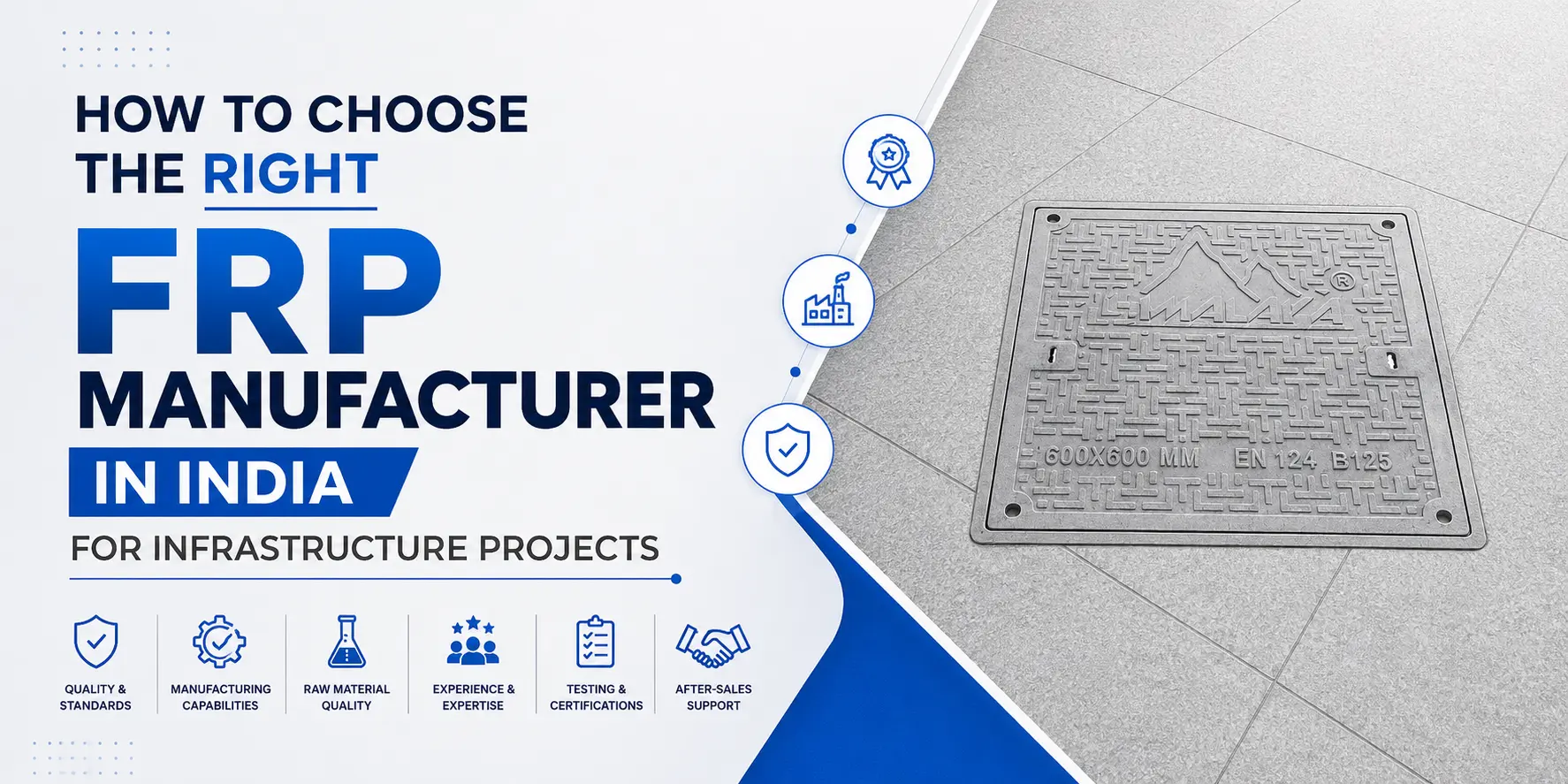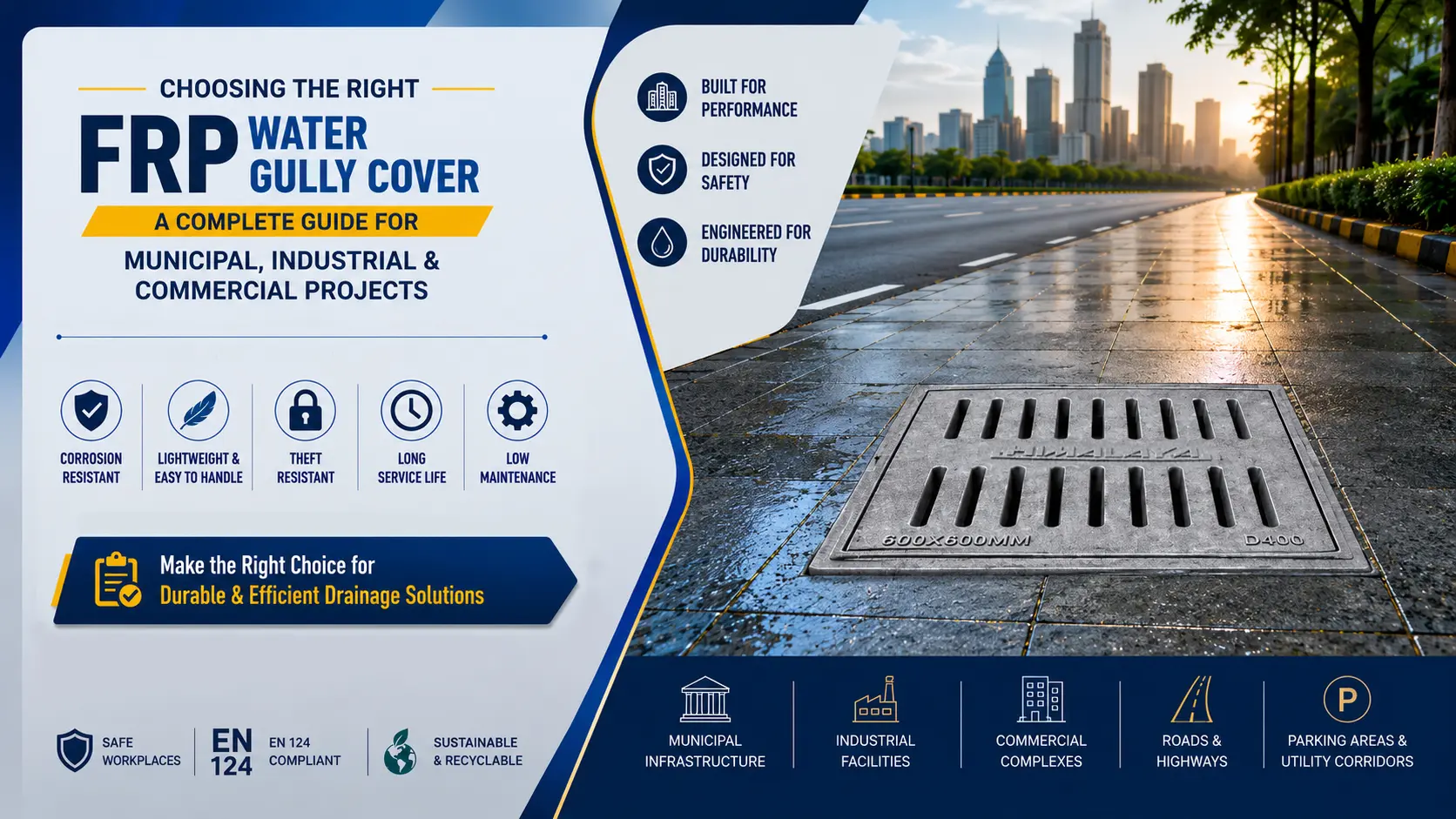
Modern infrastructure depends on underground networks for drainage, sewage, electricity, telecommunications, and other essential utilities. Although these systems remain largely out of sight, safe and reliable access points are necessary for inspection, maintenance and repair. The manhole cover installed over each access point therefore plays an important role in the overall infrastructure system. An FRP Square Manhole Covers provides a composite alternative for projects requiring durable, corrosion-resistant and lightweight access solutions. Manufactured from FRP/GRP material, these covers can be particularly useful where conventional materials may face challenges associated with corrosion, handling, or demanding environmental conditions.
Selecting the right cover, however, requires consideration of more than its shape. Project teams should evaluate load requirements, dimensions, installation environment, surface characteristics, and long-term operating conditions before specifying a solution.
The Role of Square Covers in Utility Infrastructure
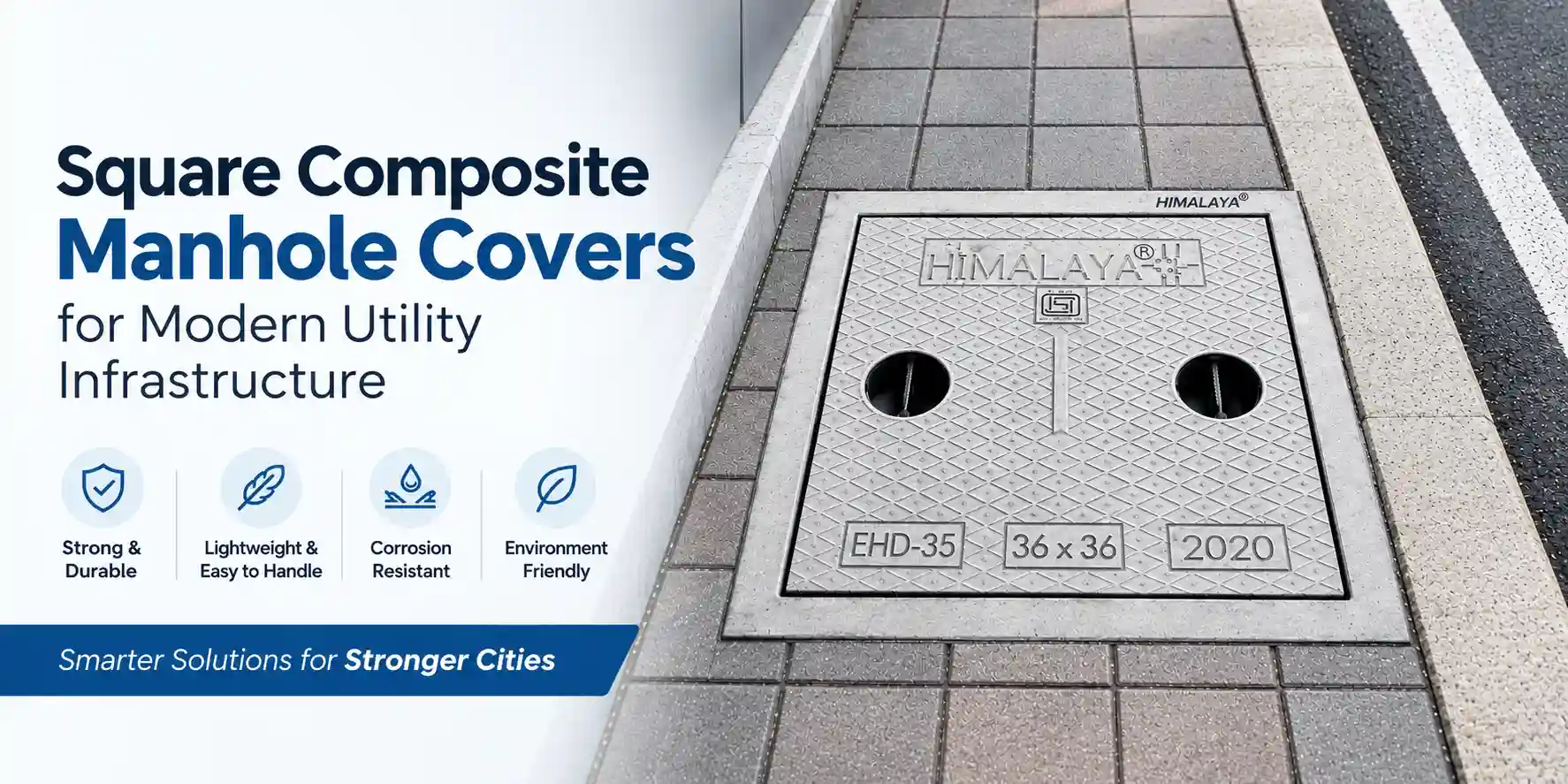
Square access openings are commonly incorporated into underground chambers and utility systems. A compatible Square Manhole Cover provides a defined access point while helping protect the infrastructure below when the chamber is not being accessed.
Depending on project design, composite access covers can be considered for applications involving:
- Underground drainage chambers
- Sewage access points
- Electrical utility chambers
- Telecom infrastructure
- Inspection pits
- Gas and valve chambers
- Petrol pump utility areas
- Pedestrian zones and parks
The final cover configuration should always correspond with the chamber dimensions, location, and anticipated loading conditions.
What Makes FRP/GRP Suitable for Manhole Covers?
FRP stands for Fibre Reinforced Polymer, while GRP refers to Glass Reinforced Plastic. Composite construction combines reinforcement with a resin matrix to create a material with useful characteristics for infrastructure applications.
Himalaya Composites & Precast Pvt. Ltd. manufactures its FRP/GRP manhole covers using high-quality fibre-reinforced material with a polyester resin matrix.
Corrosion Resistance
One of the key advantages of an FRP manhole cover is its resistance to corrosion. Infrastructure products may be exposed to moisture, wastewater, chemicals, and changing environmental conditions throughout their service life.
FRP/GRP materials can therefore be particularly useful in coastal, chemical and urban environments where corrosion is an important consideration.
Lightweight Construction
Weight affects transportation, installation and access during maintenance. FRP covers are lightweight compared with traditional cast iron alternatives, making them easier to handle during installation and routine access activities.
For projects involving numerous access points, easier handling can also simplify site operations.
Durable Composite Material
Utility access covers are expected to remain functional while exposed to their surrounding environment. Composite construction provides a durable solution for projects where resistance to corrosion and environmental exposure is important.
These characteristics make an FRP Square Manhole Cover worth considering for a range of modern infrastructure requirements.
Load Class Is a Critical Selection Factor
Selecting a manhole cover without considering the expected load can result in an unsuitable specification. A cover installed in a pedestrian zone does not experience the same operating conditions as one used in an area exposed to heavy vehicles.
Himalaya’s FRP/GRP manhole cover solutions are designed according to BS EN 124:2015, with load classes available from A15 to F900.
The required load class should be determined according to the installation location and expected loading conditions.
Rather than selecting the highest available class automatically, engineers and project teams should specify a cover suitable for the actual application. This helps ensure that the product configuration corresponds with the infrastructure design and intended use.
Why Does an Anti-Skid Surface Matter?
Surface characteristics are another important consideration, particularly for access covers installed in areas used by pedestrians or vehicles.
Himalaya’s FRP/GRP manhole covers feature an anti-skid surface. This is designed to provide improved grip at the access point and is especially relevant in locations that may be exposed to rain or surface moisture.
Anti-skid characteristics can be useful in locations such as:
- Footpaths
- Parks
- Utility access areas
- Commercial developments
- Municipal infrastructure
- Other pedestrian-accessible locations
Surface performance should be considered alongside load capacity, dimensions, and installation requirements rather than treated as a separate selection criterion.
Selecting the Appropriate Size and Configuration
Correct dimensions are essential when choosing a Composite Manhole Cover. The cover and frame need to correspond with the chamber opening and overall project design.
Himalaya’s FRP/GRP manhole cover range accommodates clear openings from 300 mm to 2000 mm, with custom sizes available according to project requirements.
For square access points, project teams should confirm the required chamber dimensions before finalising the cover.
Important factors include:
- Clear opening dimensions
- Chamber configuration
- Frame requirements
- Available installation space
- Intended access requirements
- Location of the chamber
- Expected loading conditions
Accurate dimensions are especially important when covers are being specified for existing chambers or replacement projects.
Applications Across Modern Infrastructure
The versatility of FRP/GRP access solutions allows them to support different underground networks.
Drainage and Sewage Systems
Drainage networks require access for inspection, cleaning, and maintenance. A Corrosion Resistant Manhole Cover can be valuable in locations where continuous exposure to moisture or wastewater is expected.
Electrical Utility Access
Underground electrical systems require protected yet accessible inspection and connection points. Square composite covers can be considered where the utility chamber is designed for a corresponding cover configuration.
Telecom Networks
Telecommunication infrastructure increasingly relies on underground ducts and utility access chambers. Lightweight composite covers can simplify access when technicians need to inspect or maintain these systems.
Industrial Infrastructure
Industrial environments may involve moisture, chemicals or other conditions that make corrosion resistance an important material consideration. FRP/GRP covers can provide an alternative to conventional materials for suitable access applications.
Urban and Municipal Projects
Modern cities contain extensive networks of underground services. Composite covers can be incorporated into municipal drainage, utility and inspection infrastructure according to project requirements.
Parks and Pedestrian Areas
Manhole and inspection access points are also required in landscaped and pedestrian environments. Anti-skid surfaces and appropriate load selection become particularly important in these locations.
FRP Composite Covers and Conventional Materials
Material selection can influence handling, maintenance, and suitability for different environments.
| Factor | FRP/GRP Composite Cover | Conventional Metal Cover |
| Corrosion | Corrosion resistant | May be affected by corrosion |
| Weight | Lightweight | Generally heavier |
| Handling | Easier to handle | May require greater handling effort |
| Surface | Anti-skid options available | Depends on the product design |
| Size | Standard and custom options | Depends on the manufacturer |
| Environment | Suitable for corrosive conditions | May require corrosion consideration |
The correct choice depends on the project rather than one material being universally suitable for every application.
Key Points to Check Before Selecting a Square Composite Cover
Project engineers, contractors, and procurement teams should evaluate the complete installation conditions before ordering covers.
First, confirm the load requirement according to the location. A pedestrian area, municipal road, and specialised infrastructure environment may require different load classifications.
Second, verify the clear opening and chamber dimensions. The square cover configuration must correspond to the access chamber for proper installation.
Third, consider the operating environment. Exposure to moisture, chemicals, or coastal conditions may make corrosion resistance particularly important.
Finally, assess the surface, frame requirements, and any project-specific dimensional needs. Where standard sizes are not suitable, custom manufacturing options should be discussed with the manufacturer.
Selecting a Reliable FRP Products Manufacturer
The quality of an access cover depends not only on the material but also on manufacturing consistency and the ability to supply the correct specification.
When evaluating an FRP Products Manufacturer, project teams should consider experience, manufacturing capability, available dimensions, load classes, quality systems, and ability to provide project-specific solutions.
Himalaya Composites & Precast Pvt. Ltd. has been manufacturing infrastructure products since 2004. The company has supplied products for more than 5,000 infrastructure projects across over 25 cities.
Its manufacturing capabilities include custom sizes and project-specific solutions, supported by an ISO 9001:2015-certified quality management system and pan-India supply.
For FRP/GRP manhole cover requirements, Himalaya provides solutions designed according to BS EN 124:2015, with load classes ranging from A15 to F900.
Conclusion
Square composite access covers can play an important role in protecting and maintaining modern underground utility networks. Their corrosion resistance, lightweight construction, anti-skid surface, and range of load classes make FRP/GRP a practical material option for suitable drainage, sewage, electrical, telecom, and inspection applications.
When selecting an FRP Square Manhole Cover, project teams should consider the chamber dimensions, clear opening, load requirement, installation environment, and surface characteristics rather than selecting a cover based only on size or material.
Himalaya Composites & Precast Pvt. Ltd. offers FRP/GRP manhole cover solutions with multiple load classes, a wide dimensional range, and custom options for project-specific requirements. Contact Himalaya to discuss the appropriate composite access cover for your infrastructure project.
Frequently Asked Questions
What is an FRP square manhole cover?
It is a composite access cover designed for square utility or inspection openings. FRP/GRP construction provides characteristics such as corrosion resistance, lightweight handling, and durability for suitable infrastructure applications.
Where can square composite manhole covers be used?
They can be considered for underground drainage, sewage access, electrical and telecom utilities, inspection pits, gas and valve chambers, pedestrian areas, and other infrastructure access points according to project specifications.
What load classes are available for FRP/GRP manhole covers?
Himalaya’s FRP/GRP manhole cover solutions are available in load classes from A15 to F900 and are designed according to BS EN 124:2015. The correct class should be selected based on the intended installation location.
Are composite manhole covers corrosion-resistant?
Yes. FRP/GRP materials provide corrosion resistance, making them particularly useful in environments exposed to moisture and other corrosive conditions.
Are custom sizes available?
Yes. Himalaya offers FRP/GRP manhole cover solutions for clear openings ranging from 300 mm to 2000 mm, with custom sizes available according to project requirements.
What should be checked before ordering a square access cover?
Check the clear opening, chamber dimensions, expected load, installation environment, frame requirements, and surface characteristics. These factors help determine the appropriate cover specification for the project.