FRP Manhole Covers: Benefits, Applications & EN 124 Load Classes
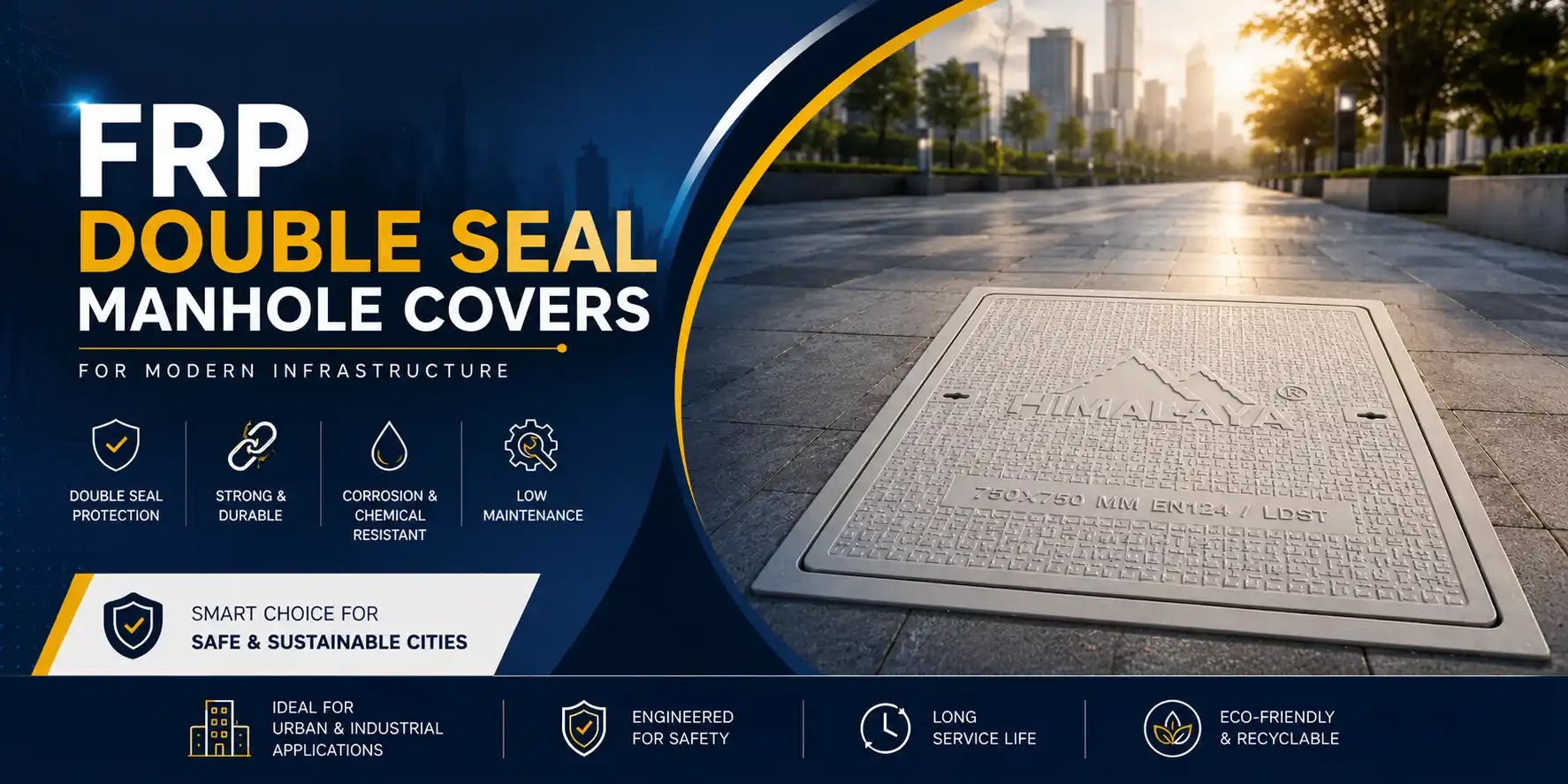
Modern infrastructure depends on reliable access systems that protect underground utility networks while ensuring safety for pedestrians and vehicles. The FRP Manhole Covers has become an increasingly preferred solution for municipal drainage systems, sewer networks, telecom chambers, electrical utility chambers, and industrial facilities due to its durability, corrosion resistance, and lightweight design. As cities continue to expand and modernize, selecting the right manhole cover plays a critical role in ensuring public safety, operational efficiency, and long-term infrastructure performance.
Across India’s growing infrastructure sector, municipal corporations, EPC contractors, utility providers, consultants, and infrastructure developers are increasingly adopting FRP and GRP manhole covers for Smart City Projects, utility networks, and urban infrastructure development.
Their ability to withstand harsh environmental conditions while reducing maintenance requirements makes them a practical alternative to traditional materials.
This guide explains what FRP manhole covers are, their key benefits, applications, and the importance of selecting the correct EN 124 load class for different infrastructure projects.
What is an FRP Manhole Cover?
An FRP Manhole Cover is a composite access cover manufactured using Fiber Reinforced Polypropylene (FRP) or Glass Reinforced Polypropylene (GRP) materials.
These covers are produced by combining high-strength reinforcing fibers with polymer resins to create a lightweight yet robust structure capable of withstanding environmental and traffic loads.
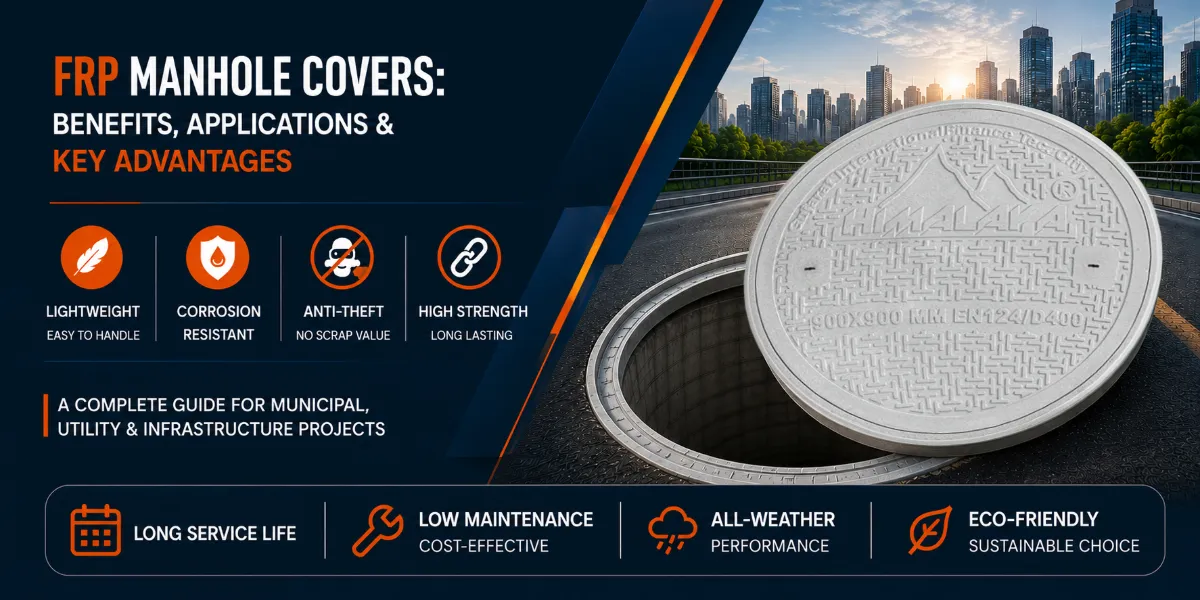
Key Characteristics of FRP Manhole Covers
- Lightweight construction
- High strength-to-weight ratio
- Corrosion and chemical resistance
- Non-conductive properties
- Zero scrap value
- Long service life
- Low maintenance requirements
- Suitable for various utility applications
Because of these advantages, FRP manhole covers are widely used in municipal infrastructure, industrial projects, telecom networks, and utility chambers.
As the demand for durable and low-maintenance infrastructure products continues to grow, selecting the right FRP manhole cover manufacturer becomes equally important. Manufacturers with expertise in composite engineering, quality testing, and standards compliance can help ensure long-term performance across municipal, utility, and industrial applications.
Key Benefits of FRP Manhole Covers
1. Lightweight Handling
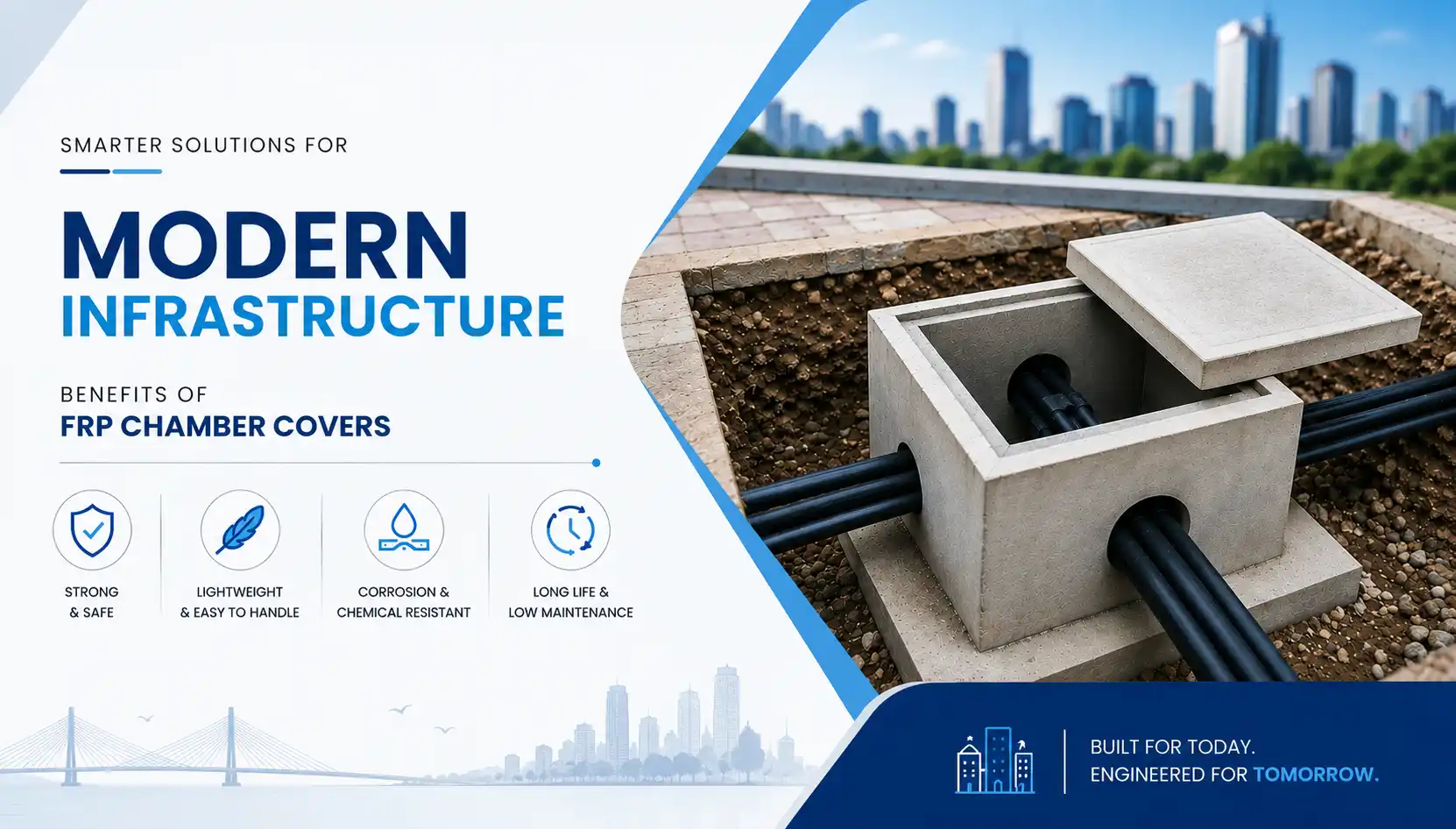
Compared to traditional covers, FRP manhole covers are lighter, making transportation, installation, and maintenance easier.
Benefits include:
- Faster installation
- Reduced labour effort
- Improved worker safety
- Lower handling costs
2. Corrosion Resistance
Unlike metallic covers, FRP does not rust or corrode when exposed to:
- Water
- Sewage
- Chemicals
- Coastal environments
- Industrial pollutants
This makes FRP ideal for drainage, sewer, and industrial applications.
3. Anti-Theft Properties
One of the major challenges with cast iron covers is theft due to scrap value.
FRP manhole covers have negligible scrap value, which helps reduce theft-related replacements and supports public safety by minimizing the risk of hazards caused by missing covers.
4. High Load-Bearing Capacity
Modern composite engineering enables heavy duty FRP manhole covers to meet stringent load requirements while remaining lightweight.
EN 124 compliant FRP covers are available for various traffic conditions, including roadways and industrial facilities.
5. Non-Conductive and Non-Sparking
FRP is electrically non-conductive, making it suitable for:
- Electrical chamber covers
- Utility access chambers
- Power distribution networks
This property contributes to improved operational safety.
6. Long Service Life
FRP materials are designed to withstand:
- UV exposure
- Moisture
- Temperature fluctuations
- Chemical attack
This results in consistent performance over extended periods.
7. Low Maintenance Requirements
Because FRP does not rust, corrode, or require protective coatings, maintenance costs are reduced throughout the product lifecycle.
FRP vs Cast Iron Manhole Covers
The choice between FRP and cast iron often depends on performance requirements, lifecycle cost, and environmental conditions.
| Parameter | FRP Manhole Cover | Cast Iron Manhole Cover |
| Weight | Lightweight | Heavy |
| Corrosion Resistance | Excellent | Prone to rust |
| Theft Risk | Very low | High |
| Installation | Easier and faster | Labour intensive |
| Maintenance | Low | Moderate to high |
| Electrical Conductivity | Non-conductive | Conductive |
| Lifecycle Cost | Lower over time | Higher maintenance cost |
| Durability | Excellent in corrosive environments | Good but susceptible to corrosion |
Practical Insight
For municipal drainage systems, telecom infrastructure, utility chambers, and industrial projects exposed to moisture or chemicals, FRP manhole covers often provide a more economical lifecycle solution than traditional cast iron alternatives.
Understanding EN 124 Load Classes
What is EN 124?
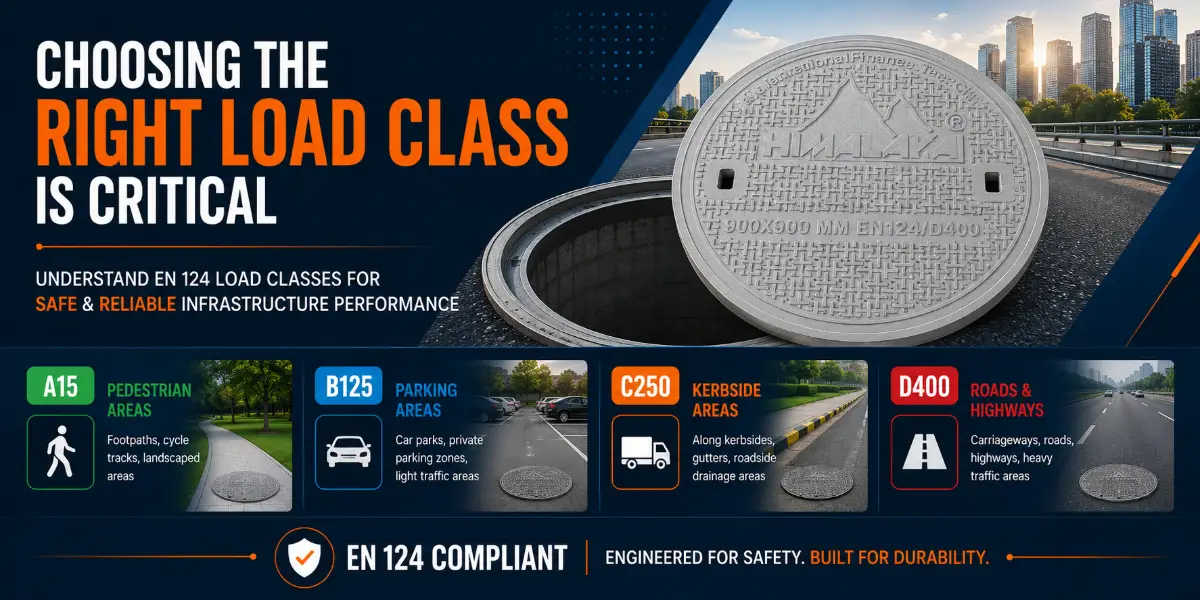
EN 124 is a widely recognized European standard used to classify manhole covers and gully tops according to their load-bearing capacity.
Selecting the correct load class is essential for safety, durability, and compliance.
EN 124 Load Class Table
| Load Class | Typical Application | Traffic Category |
| A15 | Landscaped areas, pedestrian zones | Pedestrian traffic |
| B125 | Footpaths, parking areas | Light vehicle traffic |
| C250 | Roadside channels, kerbside areas | Medium traffic |
| D400 | Roads, highways, industrial roads | Heavy vehicular traffic |
A15 Load Class
Suitable for:
- Gardens
- Parks
- Green spaces
- Pedestrian walkways
B125 Load Class
Used in:
- Parking areas
- Commercial complexes
- Residential developments
- Sidewalks
C250 Load Class
Designed for:
- Road shoulders
- Kerbside drainage
- Medium traffic zones
D400 Load Class
A D400 FRP Manhole Cover is commonly selected for:
- Municipal roads
- Industrial zones
- High-traffic roads
- Smart city infrastructure projects
Choosing the wrong load class can lead to premature failure, increased maintenance, and safety risks.
Applications of FRP Manhole Covers
FRP covers are widely used as municipal drainage covers, utility chamber covers, telecom chamber covers, and stormwater drainage covers across urban infrastructure projects.
Municipal Drainage Systems
FRP covers are extensively used in municipal drainage networks due to their corrosion resistance and long-term reliability.
Sewer Networks
Sewer manhole covers frequently encounter moisture, gases, and chemical exposure, making FRP an ideal material choice.
Stormwater Drainage
Stormwater drainage covers benefit from lightweight installation and resistance to environmental degradation.
Telecom Chambers
Telecom infrastructure requires secure and durable chamber covers that are easy to access during maintenance.
Electrical Utility Chambers
Non-conductive FRP covers provide an additional layer of safety for electrical utility networks.
Industrial Plants
Industrial facilities often operate in corrosive environments where traditional materials may deteriorate over time.
Commercial Developments
Business parks, malls, campuses, and commercial complexes increasingly use composite manhole covers for safety and aesthetics.
Smart City Infrastructure Projects
Smart city developments prioritize durable, low-maintenance, and sustainable infrastructure solutions, making FRP a preferred option.
How to Choose the Right FRP Manhole Cover
Selecting the right cover requires evaluating several project-specific factors.
1. Load Requirements
Determine the expected traffic load and select the appropriate EN 124 load class.
2. Traffic Conditions
Consider whether the cover will be installed in:
- Pedestrian zones
- Parking areas
- Roadways
- Industrial traffic routes
3. Installation Environment
Assess environmental conditions such as:
- Corrosion exposure
- Water contact
- Chemical exposure
- Coastal environments
4. Chamber Size
Ensure the cover dimensions match the chamber opening and access requirements.
5. Compliance Standards
Choose products that comply with relevant standards such as EN 124.
6. Utility Type
Different applications may require specific features such as:
- Locking systems
- Non-conductive properties
- Custom markings
- Utility identification
Beyond technical specifications, buyers should evaluate the expertise and manufacturing capabilities of the FRP manhole cover manufacturer. Factors such as quality control processes, testing procedures, compliance certifications, customization capabilities, and project experience can significantly impact product reliability and lifecycle performance.
Why Smart Cities and Modern Infrastructure Projects Prefer FRP Manhole Covers
Infrastructure planners increasingly focus on lifecycle performance rather than only initial procurement costs.
FRP manhole covers support this objective by offering:
- Improved worker safety through lightweight handling
- Corrosion resistance in challenging environments
- Reduced theft-related losses
- Lower maintenance requirements
- Long operational lifespan
- Sustainable infrastructure solutions
- Reliable performance across diverse applications
These advantages align with the objectives of Smart City Projects and modern urban development programs.
How Municipal Corporations Reduce Theft & Maintenance Costs Using FRP Manhole Covers
FRP manhole covers have negligible scrap value, making them less attractive for theft than traditional metal covers. They also resist corrosion and do not require protective coatings, helping reduce maintenance requirements over time. For municipal drainage, sewer, and utility networks, these advantages contribute to lower lifecycle costs and improved infrastructure reliability.
Why The Himalaya is a Trusted FRP Manhole Cover Manufacturer in India
The Himalaya is a leading FRP manhole cover manufacturer in Ahmedabad, serving municipal corporations, infrastructure developers, EPC contractors, utility service providers, and industrial projects across India.
Recognized as a trusted FRP manhole cover manufacturer in Gujarat, The Himalaya combines advanced manufacturing capabilities with application-focused engineering to deliver reliable access cover solutions for drainage, utility, telecom, and industrial infrastructure.
Key strengths include:
- Experience in infrastructure and utility access solutions
- EN 124 compliant FRP manhole cover solutions
- Quality-focused manufacturing processes
- Wide range of load classes and applications
- Expertise in municipal, telecom, drainage, and industrial requirements
- Reliable support for consultants, contractors, and project developers
With a strong focus on quality, performance, and application-specific engineering, The Himalaya supports projects ranging from municipal infrastructure to large-scale industrial developments.
Key Takeaways
- FRP manhole covers provide a lightweight, durable, and corrosion-resistant alternative to traditional materials.
- EN 124 load classes help ensure the correct cover is selected for the intended traffic conditions.
- FRP covers reduce theft risks, maintenance costs, and handling challenges.
- Applications include municipal drainage, sewer networks, telecom chambers, electrical utilities, and industrial facilities.
- Selecting the right load class and application-specific design is essential for long-term performance.
Conclusion
As infrastructure networks continue to expand across India, selecting the right access cover becomes increasingly important for safety, reliability, and lifecycle value.
An FRP Manhole Cover offers advantages such as corrosion resistance, lightweight handling, theft prevention, and long-term durability. When combined with the appropriate EN 124 load class, FRP covers can deliver dependable performance across municipal drainage systems, utility chambers, industrial facilities, and smart city projects.
For project-specific guidance and EN 124 compliant FRP manhole cover solutions, consult with experienced manufacturers who understand the demands of modern infrastructure development.
Looking for FRP Manhole Covers for your next infrastructure project? Contact The Himalaya to explore application-specific solutions designed for municipal, utility, industrial, and smart city requirements.
FAQs:
1. How long does an FRP manhole cover typically last?
FRP manhole covers are designed for long-term use and can provide many years of reliable performance when installed correctly and used within their specified load class. Their resistance to corrosion, moisture, and environmental exposure contributes to a long service life.
2. Are FRP manhole covers suitable for coastal areas?
Yes. FRP manhole covers are commonly used in coastal environments because they resist saltwater exposure and corrosion better than many traditional metallic alternatives.
3. Can FRP manhole covers be customized with utility markings?
Many FRP manhole covers can be manufactured with custom markings, utility identifiers, logos, or application-specific labels to help with asset identification and maintenance management.
4. Do FRP manhole covers require regular painting or coating?
No. FRP manhole covers do not rust and generally do not require protective coatings or periodic painting, helping reduce maintenance requirements over time.
5. Are FRP manhole covers suitable for underground electrical networks?
Yes. Because FRP is a non-conductive material, FRP manhole covers are often used for electrical chambers, cable trenches, and utility access points where electrical safety is important.
6. What factors affect the load-bearing performance of an FRP manhole cover?
Load-bearing performance depends on factors such as cover design, material composition, reinforcement structure, installation quality, and compliance with relevant load classifications such as EN 124.
7. Can FRP manhole covers be used in industrial environments?
Yes. FRP manhole covers are widely used in industrial facilities because they offer resistance to moisture, chemicals, and corrosive conditions commonly found in manufacturing and processing plants.
8. Why are lightweight manhole covers preferred for maintenance operations?
Lightweight manhole covers can improve handling efficiency, reduce manual lifting effort, and support safer inspection and maintenance activities for utility personnel.
9. Are FRP manhole covers environmentally sustainable?
FRP manhole covers can contribute to sustainable infrastructure by offering a long service life, reduced maintenance requirements, and lower replacement frequency compared to some conventional alternatives.
10. What should be checked before installing a manhole cover?
Before installation, factors such as chamber dimensions, load requirements, traffic conditions, frame compatibility, and compliance standards should be verified to ensure proper performance and safety.